The Cultural Impact of “A Cookies Jungle Boy Bag of Weed” in modern media culture
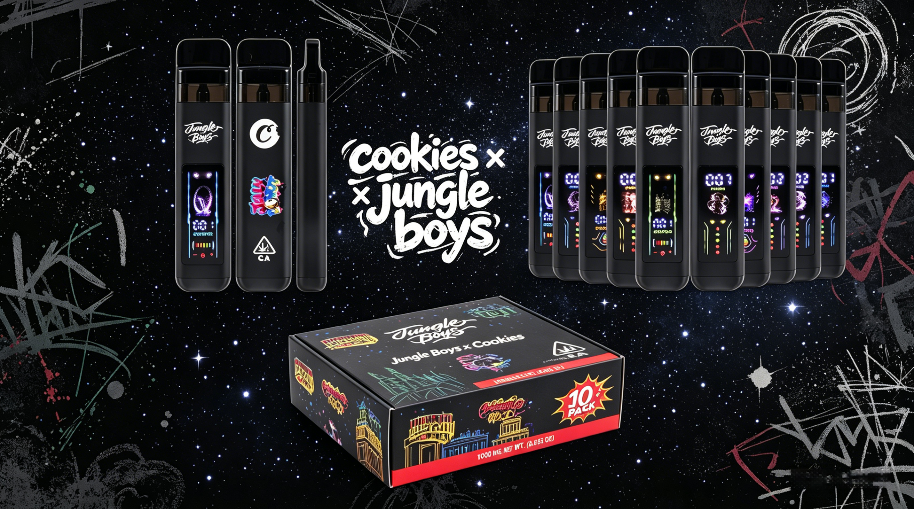
At first glance, the phrase **“a bag of cookies jungle boys”** might appear to be a random search term. In today’s media culture, however, it functions more like a code: it refers not merely to cannabis itself, but to an entire visual universe encompassing streetwear, music, brand aesthetics, collector culture, and digital self-presentation. This is precisely where its cultural significance lies. By now, terms such as “Cookies” or “Jungle Boys” have, in many contexts, evolved from mere product names into symbols of a distinct visual and social language centered on lifestyle, exclusivity, and pop culture.
The fact that this symbolism is so powerful today is also linked to the sheer scale of the cannabis issue. According to the UNODC World Drug Report 2025, cannabis remains the most widely consumed controlled substance globally. Regarding Europe, the EUDA reports in the European Drug Report 2025 that cannabis is the most prevalent illicit drug; an estimated 8.4% of adults in Europe—or approximately 24 million people aged 15 to 64—have consumed it within the past year. The larger a market becomes, and the more commonplace a topic becomes within society, the more deeply its brands, imagery, and narrative patterns become embedded in the media landscape.
Auch die gesellschaftliche Akzeptanz hat sich messbar verschoben. Pew Research Center berichtete 2024, dass eine große Mehrheit der US-Erwachsenen die Legalisierung von Marihuana entweder für medizinische und Freizeitnutzung oder zumindest für medizinische Zwecke befürwortet. Gallup meldete Ende 2024 zudem, dass 15 % der Amerikaner nach kombinierten Daten aus 2023 und 2024 angeben, Marihuana zu rauchen. Solche Werte sind kulturell relevant, weil sie erklären, warum Cannabis in Filmen, Musik, Social Media und Mode heute weniger als Randthema und häufiger als Teil des Mainstreams erscheint.
**Cookies**, in particular, serves as a prime example of this shift from a mere commodity to a cultural brand. The brand describes itself as something more than just a cannabis label—namely, as a global movement built upon authenticity, culture, innovation, and legacy. Official company channels emphasize its founding in 2010 by **Berner** and **Jai**, the fusion of genetics, brand-building, and culture, as well as its expansion into an internationally prominent brand with streetwear influences. The fact that Berner is publicly perceived as both a musician and an entrepreneur has further amplified this effect.
Two frequently cited milestones further illustrate just how deeply Cookies has penetrated the mainstream: According to the company’s official narrative, in 2021, Cookies became the first cannabis brand to be named one of “America’s Hottest Brands” by AdAge; in 2022—according to company statements and accompanying press releases—co-founder Berner became the first cannabis executive to be featured on the cover of Forbes. Such moments are culturally significant because they transform a subculture into a compelling business and media narrative. Consequently, cannabis emerges not merely as a consumer product, but as a fully-fledged brand operating within the same ecosystem of attention as fashion, music, or sneakers.
By this same logic, Jungle Boys, too, is far more than just a product name. The official website features not only retail offerings but—explicitly—**Jungle Boys Clothing** as well. Product descriptions feature phrases such as “history, authenticity, and connection to true cannabis culture.” It is precisely this language that reveals how the brand operates: it sells not merely merchandise, but rather a sense of belonging, credibility, and scene capital. In media culture, this means that a branded pouch serves as more than just packaging; it acts as a visual statement regarding one’s taste, insider knowledge, and status.
Therefore, from a cultural perspective, “a bag of Cookies Jungle Boys” is, above all, an image. It evokes the same dynamic that drives limited-edition sneaker boxes, designer shopping bags, or music merchandise. The bag itself is photographed, reposted, collected, compared, and imbued with symbolic significance. Official Cookies content visibly links the brand to culture, music, and streetwear, while Jungle Boys simultaneously expands its clothing line and retail presentation. On social media, it is often not the contents alone that matter, but rather the recognizability of the branding within the image.
In the logic of modern media, the object thus becomes a narrative shortcut. Anyone posting a photo online featuring a distinctive Cookies or Jungle Boys bag is often communicating several things simultaneously: familiarity with specific brands, an affinity for Californian cannabis aesthetics, alignment with hip-hop and streetwear codes, and a certain curation of their own taste. The fact that Cookies officially emerged from a fusion of cultural understanding, genetics, and brand building makes this interpretation particularly plausible. The product image thus transforms into a lifestyle signal.
This development coincides with a period in which cannabis has, overall, become significantly more visible. According to SAMHSA, the share of people aged 12 and older in the U.S. who consumed cannabis in the past year rose from 19.0% in 2021 to 22.3% in 2024—representing an increase from 53.2 million to 64.2 million people. As usage and public discourse expand, stylistic forms, insider terminology, and media codes almost invariably grow alongside them. This explains why even unconventional search phrases—such as a bag of cookies jungle boys—can today function as cultural search formulas.
At the same time, this increased visibility has an ambivalent side. The more cannabis is integrated into everyday life—through design, color, fashion, and brand aesthetics—the more the boundary between product, lifestyle, and entertainment blurs for certain target groups. A Washington State University press release regarding a study published in 2025 reported that colorful, health-conscious branding can make cannabis edibles more appealing to adolescents. This is significant because it demonstrates that the cultural power of packaging and imagery is real; it generates not only brand value but also regulatory conflicts and issues concerning youth protection.
Particularly in Germany and Europe, this conflict is becoming increasingly visible from a regulatory standpoint. In its FAQ regarding the German Cannabis Act, the Federal Ministry of Health highlights clear limits on possession and cultivation; at the same time, the handling of advertising remains a politically and legally sensitive issue. Within the medical sector—and according to a recent legal analysis of a 2026 Federal Court of Justice ruling—it has been reaffirmed that advertising for prescription-only medical cannabis directed at consumers remains prohibited. This demonstrates that while brand imagery circulates freely in global media, the direct marketing of such products in Europe continues to face strict limitations.
It is precisely from this dynamic that the true cultural tension of the subject arises. In digital feeds, music videos, and brand imagery, cannabis often appears as a contemporary accessory—stylish, curated, and photogenic. In the realms of politics and public health, however, it remains a heavily regulated domain. The European Drug Report 2025 serves as a reminder that while cannabis accounts for the largest share of the EU’s illicit retail drug market—with an estimated value of at least 12.1 billion euros—it continues to exist within the complex interplay of market forces, law, public health, and regulatory control.
That is why The Cultural Impact of “A Cookies Jungle Boy Bag of Weed” is, ultimately, less a story about a single bag than about the media logic of our time. Brands like Cookies and Jungle Boys represent the fusion of cannabis with streetwear, music, entrepreneurship, and visual self-expression. The search term a bag of cookies jungle boys therefore functions as a cultural cipher: it bundles product, image, status, subculture, and algorithm into a single phrase. And that is precisely what makes it so compelling for modern media.
Attention : cookies jungle boy 1g disposable | cookies thc vape | 2g disposable vape | vape for sale
 empty 1g vape
 empty 2g vape
 empty 3g vape
 empty dual chamber vape
 empty led vape
 USA STOCK VAPE
 EU German stock vape