 empty 1g vape
 empty 2g vape
 empty 3g vape
 empty dual chamber vape
 empty led vape
 USA STOCK VAPE
 EU German stock vape
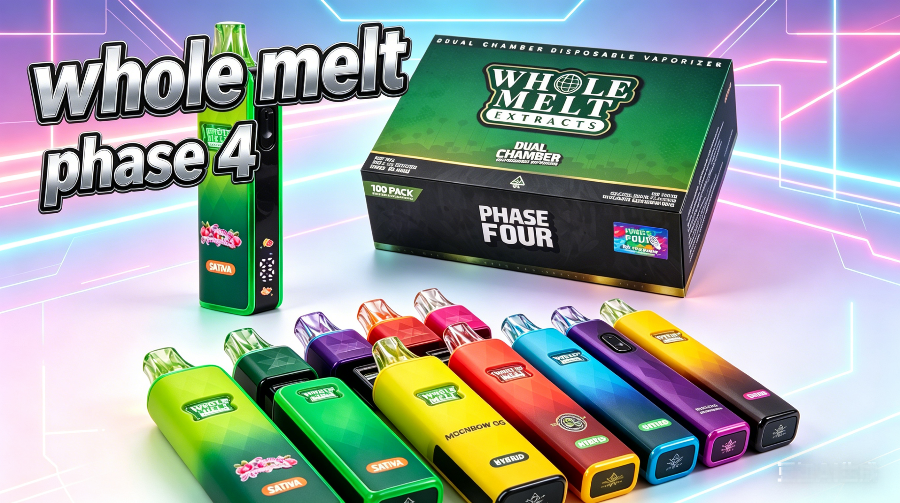
Whole Melt Phase 4 Disposable Pens: What Really Matters About Disposable Vape Hardware in 2026
In short
**Disposable pens may seem convenient, but in 2026, the real story is not convenience—it is regulation, battery safety, and authenticity verification.** The latest public signals from the USA, the UK, Belgium, and the WHO point toward stricter controls rather than the unbridled rise of traditional disposable formats.
The search term **whole melt phase 4 pens disposable** initially sounds like a simple product keyword. In reality, however, it conceals a much larger question: **Why are users still interested in disposable hardware at all, when the market is simultaneously becoming increasingly regulated?** It is precisely this tension that makes this topic so interesting in 2026. While brands and retailers often emphasize convenience, design, and "next-generation" rhetoric, authorities and legislators present a different picture: the focus is shifting increasingly toward **admissibility, traceability, battery requirements, and youth protection**.
Data Box 2026: What the Public Figures Really Show
FDA
Currently, only 41 e-cigarettes are authorized for lawful sale in the USA.
CDC
In 2024, 5.9% of U.S. middle and high school students currently used e-cigarettes; among these users, 55.6% used disposables.
UK
The sale of single-use vapes has been banned since June 1, 2025.
Belgium
Disposable electronic cigarettes have been banned there since January 1, 2025.
The WHO also explicitly states that the marketing of e-cigarettes as a consumer product has so far yielded no proven net benefit for public health, and that their use among children and adolescents in many countries exceeds that of adults.
This is the actual context: Not "disposables are taking over everything," but rather: disposables are under greater pressure than they were just a few years ago.
1. Why the topic remains fascinating in the first place
Precisely because disposable devices have become more challenging from a regulatory standpoint, many readers are seeking guidance. They want to understand whether such a device still aligns with current market trends—how much of it represents genuine product advancement versus mere packaging and marketing—and what risks one might overlook by focusing solely on design or brand name.
These questions are legitimate. For in 2026, public regulation and market communication do not tell the same story. Brands speak of innovation. Authorities speak of control, safety, and limitation.
2. Whole Melt Phase 4: What Can Actually Be Articulated Clearly in Public
The official brand website for Whole Melt Extracts describes an authentication system: authentic products are supposed to bear a verification code on their packaging, and the site lists disposables, carts, and various generations of devices.
However, it is crucial to note: this classification should rely solely on clearly verifiable, official information. This is vital for readers, particularly in this segment, where the question of authenticity is often more important than promotional language.
3. What “the Advantage” of Disposable Pens Still Means in 2026
comfort
No separate setup, no additional hardware decision, no switching between pen and cartridge.
Quick Start
From a user's perspective, the format is simpler than modular systems.
Clean product form
For many buyers, a finished device is easier to understand than an open hardware ecosystem.
However, it is precisely these apparent advantages that are increasingly being called into question today. For from a regulatory standpoint, the disposable model is—in several markets—treated not as a model for the future, but rather as a problem category. The UK ban, the Belgian ban, and the WHO’s stance demonstrate this very clearly.
4. The Actual Turning Point: Batteries and Sustainability
One point that is often overlooked in traditional product blogs is the battery. The EU Council stipulates that, by 2027, portable batteries in devices must be removable and replaceable by end users. Furthermore, stricter requirements regarding labeling, safety, and QR-code-based product information will be introduced.
This is relevant to the topic of Whole Melt Phase 4 disposable pens, as it touches upon the fundamental logic of this product format. The more regulation shifts toward longevity, traceability, and interchangeability, the more difficult it becomes to maintain the narrative that disposable hardware is simply "the future."
This conclusion is an assessment based on regulatory trends, not an assertion of an explicit ban in every market.
5. What Readers Should Realistically Check Regarding Whole Melt Phase 4
- **Is there an official verification process?** At Whole Melt, the brand's website refers to verification codes and product authentication.
- **Is the source credible?** If technical specifications appear only on sales pages—but cannot be clearly verified on an official brand or regulatory website—caution is advised.
- **Does the product format suit the target market?** In the UK and Belgium, classic disposables have already been significantly restricted or banned.
- **Is the conversation limited to taste and design—or does it also cover compliance?** The WHO recommends that, wherever e-cigarettes are permitted, strict regulations be implemented to reduce their appeal and potential harm.
6. Why the term "Future of Vaping" feels weaker in 2026 than it used to
The slogan "they’re the future of vaping" works as a marketing formula, but the most recent public data does not support it particularly well. With only 41 authorized e-cigarettes, the FDA signals a restrictive legal framework in the U.S. The UK has banned single-use vapes. Belgium has done the same. And the WHO is calling for strict regulation—specifically due to youth targeting and public health risks.
**In other words:** Anyone writing about disposable pens in 2026 comes across as more credible when focusing on **market pressures, safety concerns, and testing standards**—rather than on unbridled hype about the future.
Mini FAQ
Will disposable pens still be a growth format in 2026?
They remain visible, but the strongest official signals point toward more regulation and more restrictions—not fewer.
Is Whole Melt Phase 4 publicly verifiable as an authentic product?
The official Whole-Melt website describes branded products, disposables, and a verification system. This is a useful starting point, but it does not replace market- or legal-related due diligence.
What is the most important reader question in 2026?
Not just "how good is the device?", but rather: Is it comprehensible, verifiable, and—in the respective market—even viable?
Conclusion
In 2026, a good article on **Whole Melt Phase 4 disposable pens** should not begin with superlatives, but rather with context. Yes, disposable hardware is convenient. However, the more relevant topics today are **authenticity, regulation, battery requirements, and market compatibility**. Anyone who approaches the subject in this way writes not only more engagingly but also more credibly. For the strongest public data currently available points more toward **increased scrutiny** than toward a simple triumphant march of disposable vapes.