The Advantages of Empty Swirl Vape Cartridges for Oils: What Really Matters in 2026
The market for vaping hardware is undergoing a noticeable shift. While disposable products are facing regulatory and environmental pressure in many markets, refillable systems remain relevant for adult users. In 2024, the European Commission noted that the majority of e-cigarette users in the EU continue to prefer refillable devices, whereas disposables are used disproportionately by individuals aged 15 to 24. In the United Kingdom, the sale and supply of single-use vapes have been prohibited since June 1, 2025. Against this backdrop, empty, refillable cartridge systems—including *empty swirl vape cartridges*—are once again coming into sharper focus.
Why this topic is important right now
The trend away from disposable products is not merely a matter of public image, but a tangible market shift. The British government estimates the volume of discarded single-use vapes at around five million units per week; at the same time, they have been linked to a growing stream of difficult-to-recycle waste and lithium batteries. The European Commission makes a similar argument: single-use e-cigarettes generate plastic waste, electronic waste, and hazardous residues after every use—and at a significantly higher frequency than other device categories.
What is actually meant by *empty swirl vape cartridges*
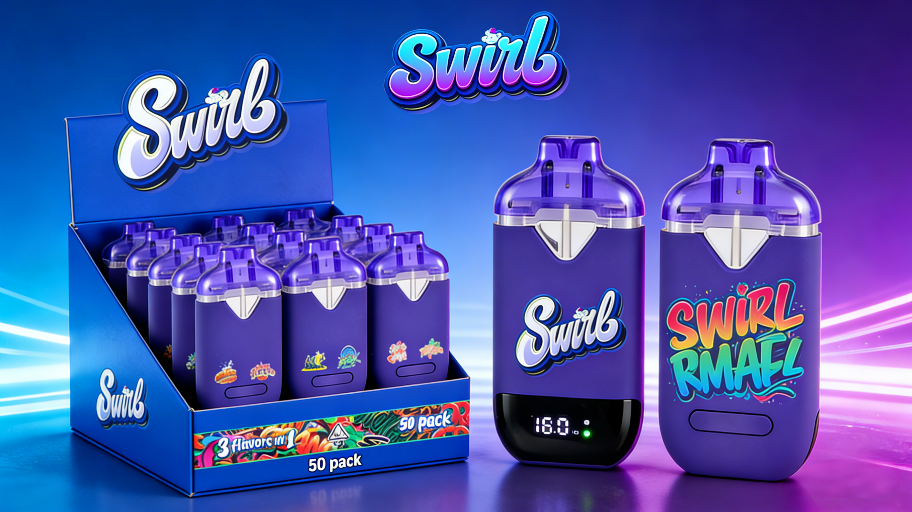
In practice, *empty swirl vape cartridges* refer to empty cartridges that are filled only after purchase. The tangible advantage here lies not in the "swirl" aesthetic itself, but in the refillable concept: the hardware and the filling material can be kept more distinct than with traditional single-use products. Precisely for this reason, claims regarding the benefits of these products hold true when viewed as part of a refillable system—rather than merely as a design trend. This classification also aligns with current regulations, which clearly distinguish refillable systems from single-use products.
1. Lower disposable component than with single-use vapes.
The greatest practical advantage of empty cartridges becomes apparent when they are combined with a reusable battery device. In this scenario, the entire unit—including the battery—does not need to be discarded every time a cartridge is depleted. Indeed, this very disposable nature currently constitutes one of the primary points of criticism directed at the disposable segment. Official British sources point to significant environmental impact, problematic waste disposal, and a high volume of discarded single-use vapes; additionally, the EU Commission identifies plastic waste, e-waste, and chemical residues as key issues associated with the disposable format.
2. Better alignment with the rules for refillable systems
Another advantage is the alignment with existing EU regulations for refillable e-cigarettes. Under Article 20 of the Tobacco Products Directive, e-cigarettes and their containers must—among other requirements—be child-resistant and tamper-evident; furthermore, a mechanism is mandated that enables refilling without leakage. The Commission also requires a high degree of purity for the ingredients. For manufacturers, fillers, and brands, this means that empty cartridges can be effectively integrated into standardized, compliance-oriented processes—provided they are used exclusively with formulations specifically designed for them.
3. Refillable is a better fit for the mature core market.
A finding by the European Commission is of particular relevance to brand positioning and product assortment strategy: the majority of e-cigarette users in the EU prefer refillable devices, whereas disposables are more prevalent among younger age groups. From this, it can be inferred that empty, refillable cartridges align better with a more mature and deliberate usage pattern than do traditional disposable products. This is not a promotional claim, but rather a logical market assessment based on current EU data.
4. Greater Control over Filling and Product Changeovers
In practice, empty cartridges offer greater flexibility regarding filling than do sealed, disposable products. The measurable regulatory basis for this is significant: The EU mandates a controlled, leak-proof refill system for e-cigarettes, as well as clear labeling and standardized product notification. This yields a tangible operational advantage: Those who work with empty cartridges can integrate hardware and e-liquids within more structured quality control and documentation processes, rather than relying on fully pre-assembled, disposable products. This represents an operational conclusion derived from the regulatory framework—not merely a marketing promise.
5. Enhanced Future Viability in a Stricter Regulatory Environment
The regulatory direction has become clearer. In the United Kingdom, as of June 1, 2025, single-use vapes may no longer be sold or supplied; reusable vapes, however, will remain permissible. In parallel, the WHO and EU institutions are emphasizing the risks that e-cigarettes pose to young people, as well as the need for strict regulations regarding their composition, marketing, and disposal. Those who currently opt for empty cartridges within a refillable system are thereby aligning themselves more closely with the direction in which many regulators are steering the market: away from a disposable mindset and toward more strictly controlled, reusable formats.
What must not be overlooked—despite the advantages
As significant as the practical advantages of empty cartridges may be, they do not automatically render vaping safe. The WHO points out that aerosols from e-cigarettes can contain nicotine and other potentially toxic substances. The CDC adds that e-cigarette aerosols may contain—among other things—carcinogens, heavy metals such as nickel, tin, and lead, volatile organic compounds, and ultrafine particles. Furthermore, it is important to note that while certain flavoring agents may be harmless when ingested, they can pose health risks when inhaled. The primary benefit of empty cartridges therefore lies in waste reduction, process control, and refill compatibility—not in providing a general clean bill of health.
Disposal remains a crucial point.
Even refillable systems do not fully resolve the disposal problem. The WHO generally classifies discarded electronic devices as e-waste, which can pose environmental and health risks if disposed of improperly. The FDA explicitly advises against disposing of e-cigarettes in household waste or standard recycling; instead, they should be taken to designated collection points for hazardous or electronic waste. Consequently, the ecological benefit of *empty swirl vape cartridges* is greatest when the cartridge is part of a durable system and is disposed of correctly at the end of its life.
Conclusion
In 2026, the primary advantages of *empty swirl vape cartridges* lie not in their design, but rather in the **product's structure**. Empty, refillable cartridges can reduce waste compared to disposables, better align with current EU requirements regarding refill mechanisms and product safety, and hold their own in a market where regulations are increasingly working against single-use products. At the same time, however, these benefits are truly realized only if compatible, purpose-designed formulations are used, quality and labeling regulations are adhered to, and disposal is properly organized. Within precisely this framework, *empty swirl vape cartridges* represent, above all else, one thing today: a pragmatic, more sustainable alternative to the disposable product paradigm.
Attention : swirl switch 1g+1g vape | wholesale swirl vape | dual chamber disposable vape | vape for sale
 empty 1g vape
 empty 2g vape
 empty 3g vape
 empty dual chamber vape
 empty led vape
 USA STOCK VAPE
 EU German stock vape