The Rise of Disposable Vape Pens: When Convenience Meets Quality Standards
Introduction
Disposable vape pens have gained significant visibility in recent years. The reason is easy to understand: they are ready for immediate use, require no refilling, and demand minimal maintenance. At the same time, it is precisely this simplicity that has heightened the scrutiny of authorities, health experts, and market regulators. The WHO points out that e-cigarette use among young people has increased in several countries and is considered a major public health issue. In the USA, while current e-cigarette use among adolescents did decline in 2024—falling to 5.9%, or 1.63 million users—**55.6%** of individuals within this group were users of disposable products. This demonstrates the extent to which the disposable format shapes the perception of the entire category.
Why Disposable Devices Have Gained Such Rapid Prominence
The rise of this format has much to do with its everyday practicality. Today, consumers expect products that function without requiring technical prior knowledge, are portable, and can be used immediately. This is precisely where disposable devices strike a chord. However, in 2026, convenience alone will no longer suffice. In Europe, the discourse is increasingly defined by whether a product is clearly labeled, legally registered, designed to be child-resistant, and capable of being properly disposed of at the end of its life cycle. The European Commission is currently re-evaluating the existing EU regulatory framework for tobacco, while regulations surrounding e-cigarettes, product data, and market access are simultaneously being tightened.
Today, quality means more than just a "good draw."
When the industry speaks of quality, many people’s first thoughts turn to flavor, hardware, or battery performance. However, for a reputable market player, quality is defined more broadly. Under Article 20 of the EU Tobacco Products Directive, electronic cigarettes must—among other requirements—meet specific standards regarding safety and information. These include regulations concerning ingredients and nicotine content, the inclusion of an information leaflet, a child-resistant and tamper-evident design, as well as a mechanism to prevent leakage and breakage. In other words: Today, a product is perceived as high-quality only when its performance, labeling, and safety are all in perfect alignment.
Without compliance, there is no sustainable brand quality.
A second point is often underestimated: a product may be technically impressive yet still fail from a regulatory standpoint. For e-cigarettes and refill containers within the EU, prior notification via the EU-CEG system is an integral part of the regulatory framework. Manufacturers and distributors are required to submit information to Member States before products are placed on the market. Consequently, transparency becomes an intrinsic element of product quality. For brands, this means that anyone seeking to build long-term trust requires not only a high-quality device but also clean data, consistent product information, and a fully documented supply chain.
Product safety is being enforced visibly more strictly in the EU market.
As of December 13, 2024, the new EU General Product Safety Regulation (GPSR) is also in effect. It strengthens requirements regarding product safety, documentation, online commerce, and traceability. The EU system Safety Gate demonstrates just how seriously market surveillance authorities now take this issue: in 2025, a total of 4,671 alerts were validated—an average of nearly 100 per week. Electrical devices and equipment were among the most frequently reported categories. This is particularly relevant for disposable vape pens, as they are not merely consumer goods but also battery-operated electronic products. Consequently, "quality" today also entails: verifiable technical specifications, robust documentation, and clear lines of responsibility within the distribution chain.
The environmental factor has evolved from a marginal issue into a core issue.
Perhaps the most significant change of recent years, however, is the environmental perspective. For 2023, Eurostat reports a total of 79.7 million tonnes of packaging waste across the EU—equivalent to 177.8 kg per capita. Of this total, 35.3 kg per person consisted of plastic packaging waste. For a product format based on single-use casings, individual packaging, and integrated batteries, this is no longer a mere footnote. The new Packaging and Packaging Waste Regulation (PPWR) entered into force on February 11, 2025, and generally applies as of August 12, 2026. Among other objectives, it aims to reduce packaging and to make it more recyclable by 2030. For brands and retailers, this means that, going forward, "convenience" must also entail packaging that is material-efficient, recycling-friendly, and logically designed.
Disposable devices are also a matter concerning waste batteries and electronic equipment.
Furthermore, disposable vape pens contain batteries, thereby raising issues not only regarding packaging but also concerning electronics and waste disposal. In 2025, the European Commission both re-evaluated the WEEE Directive and published new rules for calculating and verifying recycling and recovery rates for waste batteries. The regulatory trend is clear: products with integrated power sources are increasingly being scrutinized under circular economy and take-back criteria. For suppliers, this means that product quality will no longer end at the point of sale; rather, it will also encompass the product's end-of-life pathway.
What "Convenience Meets Quality" Should Really Mean in 2026
Against this backdrop, the phrase "convenience meets quality" takes on a new meaning. It should not merely imply that a single-use product is simply convenient and sensorially appealing. Rather, it should signify: ready for immediate use, technically consistent, clearly labeled, regulatorily robust, and better integrated into existing safety and disposal frameworks. Current EU regulations suggest that, in the future, strong brands in this category will be evaluated primarily on five criteria: product safety, quality of information, traceability, packaging efficiency, and the handling of battery and electronic waste. This represents a more objective—yet more realistic—definition of quality.
Conclusion
The rise of disposable vape pens is real, but the next phase of the market will not be decided by convenience alone. The latest public data reveals that disposable products lie at the very center of debates regarding public health, market oversight, and environmental regulation. Consequently, anyone writing about the future of this category should focus not merely on convenience, but on the growing importance of safety, compliance, transparency, and circularity. It is precisely here that the question of whether "quality" is anything more than a marketing buzzword will ultimately be decided.
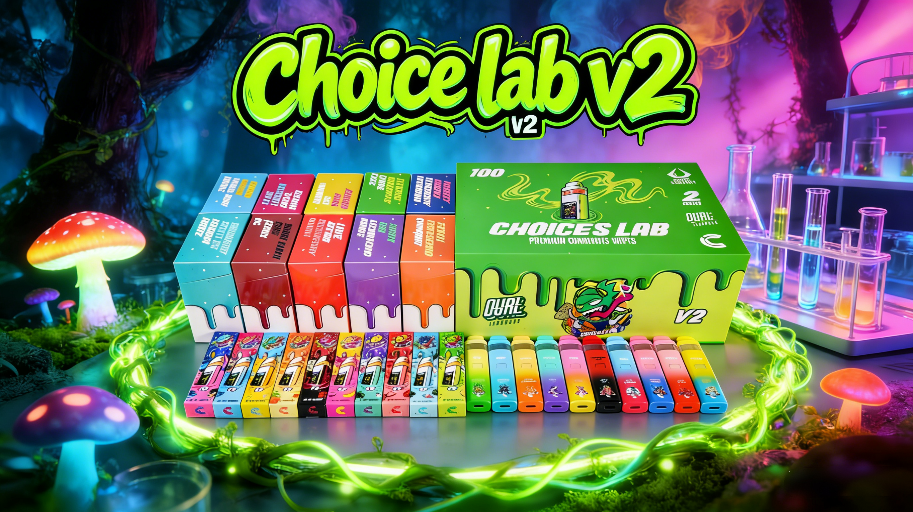
Attention : choicelab v2 led 1g+1g disposable | choice lab vape | custom dual chamber dispo | wholesale vapes
 empty 1g vape
 empty 2g vape
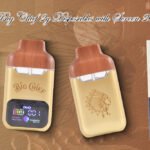 empty 3g vape
 empty dual chamber vape
 empty led vape
 USA STOCK VAPE
 EU German stock vape