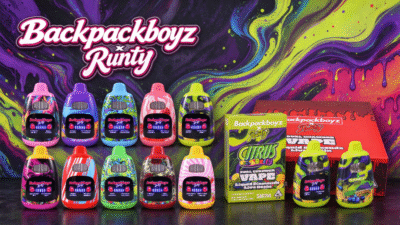
Disposable Vapes on the Rise: Why the Segment Is Gaining Market Share—and Why Transparency Is Now More Important Than Ever
The market for disposable vapes has undergone rapid changes in recent years. Those who view this development only superficially see primarily new designs, more powerful devices, and a growing number of brands. However, those who look at reliable data perceive a clearer picture: It is not a single product "taking over" the market, but rather—above all—**the disposable device segment** that is gaining significant prominence, driven by convenience, product design, flavors, and technological advancements.
A particularly telling indicator comes from US retail data: Between February 2, 2020, and September 7, 2025, sales of disposable e-cigarettes rose by 154.4%—from 4.0 to 10.2 million units per month. During the same period, their market share grew from 26.0% to 56.5%. This is no longer a minor trend, but rather a structural shift within the entire e-cigarette market.
Why, specifically, is this particular segment growing so rapidly? A key reason is the low barrier to entry. Disposable vapes are ready to use immediately and require no refilling, thereby appealing to consumers seeking a product that is as simple as possible. Another factor comes into play as well: the devices themselves are becoming technologically more sophisticated. Current market data indicates that even so-called "smart vapes"—featuring displays, animations, or usage indicators—are now emerging among the leading product models. This means that the segment no longer competes solely on the basis of convenience, but increasingly on device experience and design as well.
A second growth driver is flavorings. According to the same retail data, on September 7, 2025, non-tobacco flavors accounted for 91.7% of all disposable e-cigarettes sold. Non-tobacco flavors also dominated the overall market, capturing 79.0% of sales. Anyone seeking to understand why disposable devices are gaining market share so rapidly cannot overlook this point: flavor remains one of the strongest commercial levers in the market.
At the same time, market trends indicate that not only are more devices being sold, but larger formats or those with higher nicotine concentrations are also frequently in circulation. Between February 2020 and September 2025, the total monthly volume of nicotine sold within the e-cigarette market rose by 189.2%. This increase significantly exceeded the growth in unit sales alone. This suggests that the market has evolved not only in terms of volume but also in terms of product design.
However, anyone discussing growth must also address regulation and public health. US data on adolescents indicates that, in 2024, e-cigarettes remained the most frequently used tobacco product among middle and high school students. 1.63 million adolescents—or 5.9%—reported current use. Among those adolescents who used e-cigarettes, 55.6% used disposable products, and 87.6% used flavored products. This makes one thing clear: while the rise of this segment is economically significant, it raises substantial regulatory questions.
The European context, too, illustrates why this issue remains politically sensitive. In 2025, the WHO reported that the prevalence of e-cigarette use among adults in the European region stood at 4.6%—more than double the global average. Among adolescents aged 13 to 15, reported usage was even higher, reaching 14.3%. For manufacturers, retailers, and platforms, this means that visibility alone is no longer sufficient. Those wishing to remain viable in the long term require transparent product information, clear age restrictions, regulatory compliance, and a communication strategy that does not operate in legal or ethical gray areas.
The situation is equally relevant for Germany, even though public market data here is more fragmented. The DEBRA study—a regularly conducted, representative survey by Heinrich Heine University Düsseldorf, co-financed by the Federal Ministry of Health since 2019—continuously collects data on tobacco, e-cigarettes, and related nicotine products in Germany. Particularly in a market that is rapidly evolving in terms of product forms, flavors, and consumption habits, such continuous, representative surveys are becoming increasingly important.
Ultimately, what determines success in the market is not merely which device looks the most striking or generates the strongest short-term hype. The decisive factor will be which providers can deliver transparency, product safety, traceable labeling, and robust data within an increasingly stringent regulatory environment. Consequently, the next competitive advantage will likely not stem solely from flavor or hardware—but from trust.
Am Ende entscheidet im Markt nicht nur, welches Gerät am auffälligsten aussieht oder den stärksten kurzfristigen Hype erzeugt. Entscheidend wird, welche Anbieter in einem verschärften regulatorischen Umfeld Transparenz, Produktsicherheit, nachvollziehbare Kennzeichnung und belastbare Daten liefern können. Der nächste Wettbewerbsvorteil entsteht deshalb vermutlich nicht allein über Geschmack oder Hardware – sondern über Trust.
Attention : big chief duo v2 disposable vape | big chief vape | dual chamber disposable bulk | cheap vape
 empty 1g vape
 empty 2g vape
 empty 3g vape
 empty dual chamber vape
 empty led vape
 USA STOCK VAPE
 EU German stock vape