Exploring the Benefits of 510 Cartridge Vapes: Why They Continue to Play an Important Role in the Vape Market
The vape hardware market is evolving rapidly. All-in-one systems, dual-chamber devices, displays, and new heating technologies are competing for the attention of brands and distributors. Nevertheless, one of the most established hardware platforms remains relevant: the 510 cartridge.
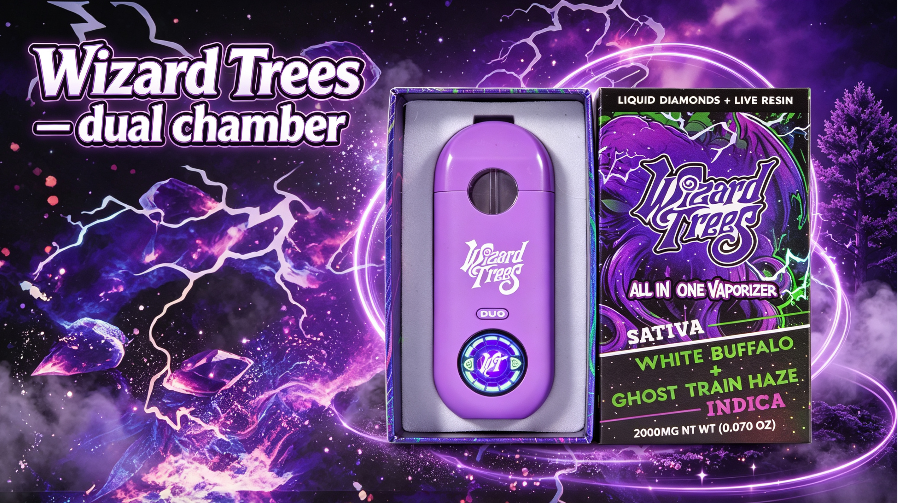
Interest in the keyword **Wizard Trees 510 cartridge vape** reflects a broader industry trend. Buyers are looking not only for well-known product names but increasingly for modular hardware solutions that allow the battery and cartridge to be separated.
This concept offers several advantages for wholesalers, distributors, and vape brands: a battery can be reused, cartridges can be developed separately, and hardware components can be more easily integrated into different product lines.
However, the 510 connection alone does not make a high-quality cartridge. Material quality, heating technology, resistance, airflow, seal integrity, and production consistency determine whether a hardware platform performs reliably in the long run.
What is a 510 cartridge?
A 510 cartridge is a vape cartridge with a widely used threaded connection that allows it to be attached to a compatible battery.
A typical cartridge contains:
reservoir
Mouthpiece
Heating component
Air duct
Gaskets and seals
electrical contacts
510 connection
The battery supplies energy to the cartridge's heating element. This heats the intended formulation.
Unlike an all-in-one device, the battery and cartridge are not permanently connected into a single unit.
It is precisely this modularity that is of interest to B2B buyers.
Advantage 1: An established modular platform
One of the key advantages of the 510 system is its modularity.
For example, a brand can develop a battery platform and subsequently offer various compatible cartridge products.
This allows hardware and consumables to be planned separately.
For retailers, this can simplify the product range structure:
This also enables different price and design segments within a product family.
But: 510 does not automatically mean universal.
A common mistake is to equate "510-compatible" with full compatibility.
In fact, cartridges can differ in terms of:
diameter
length
Contact position
Air ducting
Resistance
Heating technology
required voltage
Batteries with a recessed cartridge mount, in particular, can only accommodate specific diameters.
Professional buyers should therefore always test the battery and cartridge together.
Advantage 2: Reusable battery
In an all-in-one system, the battery, tank, and heating system are typically considered a single, integrated unit.
The 510 concept separates these components.
If a cartridge is empty, the battery can continue to be used with a new, compatible cartridge.
From the perspective of a hardware brand, this creates an interesting business model: the battery can be positioned as a long-term platform, while cartridges are replaced regularly.
This separation can also help reduce unnecessary battery disposal compared to fully integrated single-use concepts.
However, it does not automatically make a 510 system “sustainable.” Materials, battery longevity, packaging, and disposal must still be taken into account.
Advantage 3: Flexibility in product development
510 cartridges offer numerous possibilities for OEM and private-label projects.
Depending on the manufacturer, the following—among other things—can be adjusted:
Mouthpiece
reservoir
visible metal components
logo
finish
Packaging
Heating core
Resistance
Air ducting
This means a brand does not have to develop a completely new electronic device for every new product line.
This can reduce development time and tooling costs, particularly for small and medium-sized brands.
Advantage 4: Various battery platforms
510 cartridges can be combined with various compatible battery designs.
These include, for example:
klassische Pen-Batterien
compact palm-sized batteries
variable-voltage devices
Batteries with a display
protected cartridge housings
This allows the same cartridge platform to be used across different hardware segments.
A premium battery, for example, might offer a display and multiple voltage levels, whereas a simpler model relies on automatic activation.
This creates additional product range flexibility for retailers.
Advantage 5: Technical optimization instead of a one-size-fits-all solution
A professional 510 project should view the cartridge, battery, and formulation as an integrated system.
Particularly important are:
Resistance
The resistance of the heating element affects the electrical power.
Tension
Higher voltage does not automatically produce a better result. Excessive power can increase the thermal load.
viscosity
Different formulations have different flow properties.
Inlet openings
The size and position of the oil supply must match the intended viscosity.
Air ducting
Airflow affects the draw resistance and the function of the system.
A successful cartridge is therefore not created by selecting a single "premium" component, but rather by harmonizing all the components.
Material quality is becoming a key procurement issue.
The choice of materials for vape cartridges is receiving increasing scientific attention.
A study published in *Scientific Reports* in 2025 analyzed cannabis vape products from the starting material to the aerosol.
Five of the product groups examined used 510-thread cartridges. The researchers analyzed, among other elements, aluminum, cobalt, chromium, nickel, lead, tin, and zinc.
Of particular relevance to hardware purchasers: Among the 510 products examined, the marketing of a ceramic heating element did not automatically result in lower total levels of the metals typically associated with heating components.
The consequence for B2B procurement is clear:
"Ceramic" should not be considered conclusive proof of quality.
The actual material construction is the decisive factor.
Which materials should buyers examine?
For a Wizard Trees 510 cartridge vape or a comparable OEM cartridge, the supplier should provide detailed information.
This includes:
Reservoir material
Mouthpiece material
Heating core design
metals and alloys used
Sealing materials
Adhesives
electrical contacts
The question of which materials come into direct or indirect contact with the formulation is particularly important.
ASTM is currently developing a specification for restricted substances in materials used in cannabis and hemp extract vaporizers. The working draft explicitly addresses metals, ceramics, glass, plastics, polymers, and corrosion, as well as potential toxicological aspects.
For purchasers, this development indicates the direction in which professional hardware procurement is moving: away from mere marketing terms and toward documented material requirements.
Ceramic Cartridge: Marketing or Quality Feature?
Ceramic can be used in various parts of a cartridge:
Heating core
Mouthpiece
reservoir
internal structure
Therefore, the term "ceramic cartridge" can describe various designs.
For example, a cartridge with a ceramic heating core can also:
metallic resistive components
electrical contacts
Metal housing
contain.
B2B buyers should therefore not only ask:
“Is this ceramic?”
Rather:
"Which materials come into contact with the formulation and the generated aerosol under operating conditions?"
This question provides significantly more information about the actual construction.
Quality control for 510 cartridges
A professional manufacturer should have a documented testing process.
Incoming Quality Control
Important components are inspected before production:
Heating cores
Metal parts
Gaskets and seals
Reservoirs
Mouthpieces
In doing so, the material, dimensions, and visible defects should be checked.
In-process quality control
Critical points are checked during assembly:
Heating core position
seal
electrical contacts
Resistance
Threaded connection
Final Quality Control
The finished product is tested for relevant functions:
Resistance
Airflow
contact
visible defects
Installation quality
Outgoing Quality Control
Before shipment, random samples from the finished batch should be compared again with the approved reference sample.
Leak testing is particularly important.
A cartridge can look perfect immediately after production and yet still develop a leak later on.
Leaks can be influenced by:
temperature
Air pressure
viscosity
Sealing material
Filling process
Storage location
transport
Therefore, a brief test after filling is not sufficient.
A professional test plan should simulate various storage conditions.
For international supply chains, temperature and pressure changes can also be relevant.
Test the actual wording
One of the most common mistakes in cartridge projects is the use of arbitrary test material during the sampling phase.
The problem:
The actual formulation may have a different viscosity.
This can lead to the subsequent occurrence of:
Leaks
inadequate fluid intake
altered heating output
Constipation
uneven operation
Therefore, a cartridge should be tested with the actual intended, legal formulation prior to serial production.
Why a golden sample is indispensable
A product photo or a single sample is not sufficient for a professional volume order.
A better process consists of:
Engineering samples
Compatibility test
Pre-production sample
Golden sample
Pilot production
Mass production
The Golden Sample defines the definitive product version.
This includes:
Dimensions
Materials
Resistance
Heating core
Air ducting
logo
Color
Packaging
The subsequent mass-produced goods can then be compared with this reference.
Supplier Change Control: An Often Underestimated Risk
A cartridge can look identical on the outside, even though the manufacturer has changed internal components.
For example, the following could be modified:
Heating wire
Ceramics
seal
Metal alloy
adhesive
Sub-supplier
Such changes can affect performance or material behavior.
B2B buyers should therefore agree on a clear rule:
Critical materials and components must not be changed without written approval.
This simple requirement can reduce significant quality risks.
OEM Opportunities for 510 Cartridge Vapes
For brands, the 510 platform offers extensive opportunities for differentiation.
Mouthpiece
Shape, material, and surface can be individually designed.
finish
Metallic and visible components can be given various surface finishes.
Branding
Logos, laser engraving, and other brand elements can be integrated.
Packaging
Private-label packaging enables personalized brand communication and the provision of necessary product information.
Technical adjustments
For larger projects, the heating core, air ducting, and other technical parameters can be adjusted.
However, any technical change should be re-validated.
What should B2B buyers ask a supplier?
Before placing a large order, at least the following questions should be answered:
What materials are used?
Which components affect the formulation?
What is the resistance range?
Which batteries were tested?
What voltage is recommended?
What formulation viscosity is intended?
How are leaks tested for?
Are there aging tests?
Are production batches traceable?
Which AQL limits apply?
Can components be modified without consent?
How are complaints handled?
A professional supplier should be able to provide technical answers and documentation.
Current standards indicate the direction the industry is taking.
ASTM Subcommittee D37.08 deals specifically with cannabis devices and vaporizers.
Active standards include, among others, ASTM D8376 for the classification of cannabis/hemp extract vaporizers.
At the same time, ASTM is working on new topics such as:
restricted materials,
security requirements,
Hardware classification,
Data integrity in electronic vaporizer systems.
For vape brands, this means that verifiable hardware quality is becoming increasingly important.
Companies that already require technical specifications, material information, and traceability are better prepared for this development.
510 Cartridge vs. All-in-One
Both concepts have advantages.
factor
510 Cartridge
All-in-One
Rechargeable battery
Yes
Usually not.
Replaceable cartridge
Yes
no
Ease of use
high
very high
Hardware modularity
very high
lower
lower
high
very high
Battery waste per cartridge
lower
higher
System integration
separated
fully integrated
For brands, the right choice depends on the target audience, positioning, and business model.
The current trend towards all-in-one devices therefore does not automatically mean the end of the 510 cartridge.
Rather, the two systems serve different product strategies.
Total Cost of Ownership instead of the lowest unit price
A cartridge should not be evaluated solely based on its FOB price.
The actual costs also include:
Committee
Leaks
returns
Replacement deliveries
Quality inspections
Express freight
Customer Service
damaged brand reputation
A cartridge that costs a few cents more but results in significantly fewer complaints can be more cost-effective in the long run.
For professional procurement, therefore, the total cost of ownership is more critical than the lowest quoted price.
FAQ
What is a 510 cartridge?
A 510 cartridge is a cartridge with a widely used threaded connection for compatible vape batteries.
Does every 510 cartridge work with every battery?
Not automatically. Diameter, contact, airflow, resistance, and voltage must also be compatible.
Is ceramic hardware automatically better?
No. Ceramics can offer advantages, but the entire material construction must be evaluated. Ceramic systems can also contain metallic components.
Why is materials testing important?
Current scientific studies indicate that metals from hardware components in vape products can be a significant factor. Therefore, material selection and testing should be part of the procurement process.
Can 510 cartridges be customized as an OEM product?
Yes. The mouthpiece, finish, branding, packaging, and—to some extent—technical components can be customized depending on the manufacturer and order quantity.
What should be tested before placing a bulk order?
At a minimum: compatibility, resistance, leakage, storage, heating behavior, and batch consistency.
Conclusion: Is the 510 cartridge really the future?
To say that 510 cartridges are "the future of vaping" would be too sweeping a statement. The market is simultaneously evolving towards all-in-one, disposable, and modular systems.
However, the 510 cartridge possesses several structural advantages that explain its long-term relevance:
established interface
rechargeable battery
modular product architecture
extensive OEM capabilities
flexible hardware development
However, for companies looking for **Wizard Trees 510 cartridge vapes** or comparable hardware concepts, the brand name alone should not be the primary focus.
The decisive factors are material quality, cartridge-battery compatibility, heating technology, leak resistance, production consistency, and documented quality control.
Scientific research from 2025 regarding metals in cannabis vape products, along with ongoing ASTM work on materials and vaporizer hardware, demonstrates that the industry is increasingly demanding greater technical transparency.
This is a significant development for wholesalers, distributors, and brands: the next generation of successful 510 products will likely be defined not only by design and price but by verifiable hardware quality.
Companies looking to develop their own 510-cartridge platform or expand an existing product line can begin by coordinating technical requirements, target markets, formulations, and desired OEM features with a professional hardware manufacturer. Leerervape can serve as a partner for sample development, custom 510 hardware, packaging, and scalable production projects.
Der Markt für moderne Vape-Produkte entwickelt sich ständig weiter. Neben klassischen Single-Chamber-Vape-Pens gewinnen Produkte mit mehreren Kammern zunehmend Aufmerksamkeit, weil
 empty 1g vape
 empty 2g vape
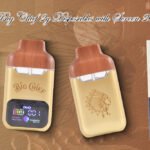 empty 3g vape
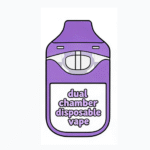 empty dual chamber vape
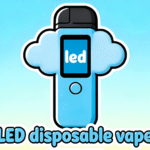 empty led vape
 USA STOCK VAPE
 EU German stock vape