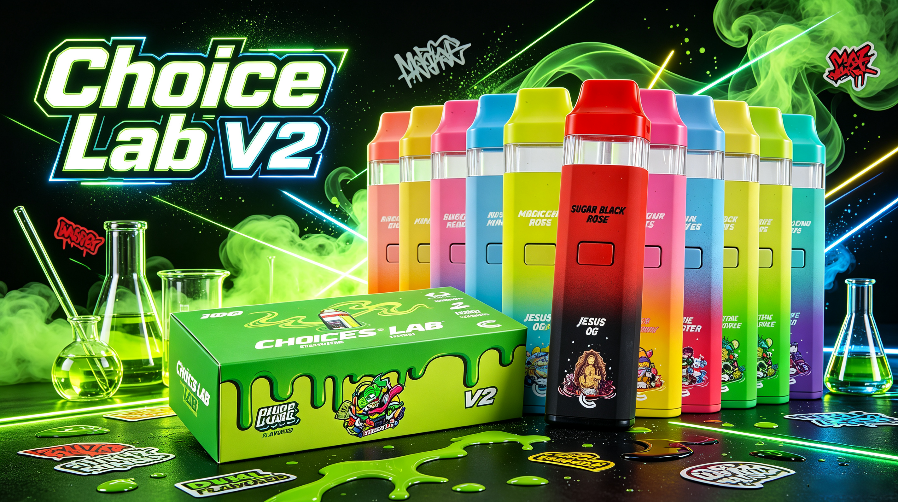
1. SEO TitleExploring the Benefits of Choice Lab V2 Vapen Disposable Vapes for On-the-Go Users
Portable vape products have become a key component of many product range strategies. However, for wholesalers, distributors, importers, and brand owners, their significance lies in more than just their compact design. What matters most is whether a product can be manufactured reliably, marketed in compliance with the law, supplied consistently, and profitably integrated into an existing portfolio.
Search interest in **Choice Lab v2 disposable vapes** highlights a broader market trend: business customers are seeking differentiated hardware concepts that combine portability, ease of use, and a tangible product advantage.
At the same time, the US market has become more demanding. Buyers must evaluate not only design and unit price but also consider product category, ingredients, market authorization, battery safety, traceability, and supply chain risks. In the nicotine segment, new tobacco products generally cannot be legally marketed in the United States without appropriate FDA marketing authorization. The FDA is continuing its enforcement actions against unauthorized disposable products and their distributors.
In contrast, cannabis vape products are primarily subject to state-level regulations. Procurement decisions must therefore always be based on the actual contents, the target market, and the intended distribution chain.
This guide explains why portable disposable and all-in-one hardware is gaining attention, the business opportunities associated with it, and how B2B buyers can select a reliable vape supplier or vape manufacturer.
Why product selection has become more difficult
A compact vape device can look impressive in a product photo. For a professional buyer, however, this hardly answers any of the crucial questions:
- Is the hardware compatible with the intended formulation?
- Does the product quality remain constant across multiple batches?
- Does the product meet the requirements of the target market?
- Can the supplier produce reorders on time?
- Are the battery, electronics, and heating system inspected and documented?
- Can the brand name and packaging design be used legally?
- What support is available for complaints?
Trend-driven products, in particular, can generate high demand within a short period. However, if the supplier lacks production discipline, the result is delivery delays, quality fluctuations, and unplanned replacement costs.
A successful product range decision therefore does not begin with the question of which device looks the most striking. It begins with the question of which product concept can be scaled in a controlled and legally compliant manner.
The development of the market for portable vape products
The global e-cigarette and vape market remains substantial, even though estimates vary significantly depending on the product definition. Grand View Research values the global e-cigarette and vape market at approximately US$45.7 billion for 2025 and anticipates further growth. However, such forecasts encompass various open, closed, and portable systems and should therefore not be interpreted as specific sales projections for an individual disposable model.
Actual sales data provide more meaningful insights for US buyers. The US E-Cigarette Sales Data Dashboard, based on Circana data, continues to show high sales volumes and significant shifts across product formats and flavor segments. As of March 22, 2026, for instance, menthol products accounted for 30.9 percent of the tracked e-cigarette market.
This dynamic demonstrates that the market is not static. Product preferences can change due to the following factors:
- Regulation and Enforcement
- Availability of individual product categories
- technical innovations
- Price trends
- Retailer and consumer preferences
- Import restrictions
- regional assortment rules
A product range that is in high demand today may come under pressure tomorrow due to new regulations, supply issues, or a technological shift. Professional wholesalers therefore view portable products as a category requiring active management, rather than as a static, unchanging standard product.
Why mobility influences demand
Compact all-in-one devices reduce the number of components that adult users need to transport or connect separately. The battery, reservoir, heating system, and housing are contained within a single integrated unit.
From a business perspective, this format can offer several advantages:
- simple retail display
- minimal need for explanation at the point of sale
- compact shipping and storage dimensions
- clearly defined product variants
- Options for visual differentiation
- Suitability for seasonal or limited-edition product ranges
However, mobility alone is not a sufficient indicator of quality. A compact housing places high demands on thermal management, airflow, sealing, and battery configuration.
The more compact the product, the more important the technical coordination of the individual components becomes.
What makes products like Choice Lab V2 interesting from a business perspective
Publicly available product listings describe variants under the names "Choice Lab" or "Choices Lab V2"—among other things—as compact dual-chamber or dual-flavor systems featuring a total capacity of 2 grams and a display. These details are derived from retailer and product pages and do not constitute independent technical verification. Buyers should therefore verify the exact configuration directly by consulting a data sheet and examining samples.
Regardless of the specific implementation, the concept illustrates several current B2B trends.
Compact all-in-one design
An integrated design can simplify handling and create a clearly recognizable retail format. For retailers, it is particularly important whether the product can be easily stored, displayed, and reordered.
Purchasers should check dimensions, weight, carton configuration, and transport requirements. A device that appears compact is not necessarily logistically efficient if the retail packaging is oversized or fragile.
Differentiation through multiple chambers
Dual-chamber systems can accommodate two separate reservoirs or product variants within a single housing. From a branding perspective, this creates a clearer distinction from conventional single-chamber devices.
However, this design entails additional inspection requirements for the purchasing department:
- Are both chambers completely separated?
- How are leaks between the systems prevented?
- Do both heating circuits operate consistently?
- How is the selection or switching performed?
- Is the electronics protected against accidental activation?
- Do the resistance and power of both chambers remain within specifications?
An innovative concept represents a business advantage only if the additional complexity does not lead to a higher failure rate.
Displays and status indicators
Displays can show information regarding battery, mode, or device status. For brands, they offer a visible way to create a premium hardware profile.
However, B2B buyers should verify whether the display actually provides relevant information and operates reliably under production conditions. Additional electronics can increase material costs, energy consumption, and potential sources of failure.
A status indicator should therefore not be merely decorative. It must be understandable and validated, and correctly explained in the operating documentation.
Brand positioning options
Unusual housing shapes, surfaces, and user interfaces can help a brand build a recognizable product range.
In doing so, companies should distinguish between three levels:
- Standard model: existing hardware with available tools
- OEM customization: Colors, logo, and packaging are customized.
- ODM development: Housing, electronics, or functional logic are developed according to customer specifications.
The higher the degree of customization, the greater the minimum order quantity, tooling costs, and development risk usually are.
Why wholesalers are evaluating innovative disposable products
Innovative devices can be a valuable addition to an existing product range. However, they should not be ordered solely because of a short-term trend.
Meet demand across multiple price segments
A product range comprising simple, mid-range, and technically sophisticated products enables retailers to appeal to various customer groups and trading partners.
A dual-chamber or display model, for example, can serve as a higher-end complement to basic hardware. This allows the portfolio to be expanded without replacing the entire product line.
Increase visibility in retail
Products with clearly recognizable functions can be easier for retailers to explain and present. This is especially true when the functional benefit can be described understandably in just a few words.
In contrast, complex features requiring extensive training can increase the support workload.
Support reorders
A product is not commercially attractive solely because it sells upon its initial launch. What matters is whether quality, availability, and the product experience are sufficiently consistent to generate repeat orders.
A large initial order followed by a wave of complaints is less valuable than a controlled program with a stable reorder rate.
Distribute portfolio risks
A broader product range can reduce reliance on a single type of device. At the same time, the number of variants must not increase to the point where capital becomes tied up in slow-moving inventory.
Professional distributors therefore check, among other things:
- Sell-through rate
- Repeat order rate
- Return rate
- Inventory coverage
- Contribution margin per SKU
- regional demand
- regulatory risk
Opportunities and Limits of the Margin
In the disposable vape wholesale sector, attractive unit prices are frequently advertised. However, the nominal purchase price reveals little about actual profitability.
The actual margin also depends on:
- Freight and insurance
- Import duties
- Inspection costs
- Test reports
- Committee
- Replacement deliveries
- Payment terms
- Storage period
- Price discounts for trading partners
- potential regulatory losses
US importers must also anticipate an increasingly uncertain enforcement and import landscape. In February 2026, Reuters reported that a significant portion of the US e-cigarette market consists of unregulated, predominantly imported disposable products and that potential import bans could alter the supply landscape.
A low FOB price therefore does not protect against regulatory, logistical, or quality-related costs.
Quality Control: What a Professional Supplier Should Demonstrate
A reliable vape supplier should not merely provide finished samples; they should also be able to explain how mass-production quality is controlled.
Incoming goods inspection
Battery cells, printed circuit boards, heating components, seals, and housing parts should be inspected before assembly.
Important checks include:
- Dimensions and tolerances
- Resistance values
- Battery capacity
- Material identity
- visible damage
- Supplier and batch information
Process control
Critical assembly steps should be monitored. These include soldered connections, installation positions, seals, and electrical contacts.
In a multi-chamber system, each chamber should be tested separately.
Final inspection
The final inspection should cover at least the following functions:
- activation
- Heating output
- Airflow
- Status display
- Charging function
- Toggle function
- Short-circuit protection
- exterior finish
Leakage and bearing test
Leaks may not become apparent immediately after filling. Testing after various storage periods and at different positions and temperatures is advisable.
The test should be conducted using the actual intended formulation. A standard oil may exhibit different viscosity and material interaction characteristics.
Traceability
A professional manufacturer should be able to trace production batches, component lots, inspection dates, and assembly lines.
Without traceability, it is difficult to narrow down the cause of an error or implement targeted corrective actions.
Battery safety is a procurement criterion.
Portable vape products typically contain lithium-ion or lithium-polymer cells. Improper design, damage, or incorrect charging can lead to overheating and fire risks.
The FDA recommends following manufacturer instructions and using only suitable batteries and charging equipment. It also points out reported fires and explosions associated with vape batteries.
For professional procurement, at least the following information should therefore be available:
- Battery cell manufacturer
- Nominal and actual capacity
- Charge and discharge limits
- Overcharge and deep discharge protection
- Short-circuit protection
- Temperature behavior
- UN 38.3 transport documentation
- applicable safety inspections
- maximum storage period
- recommended charging parameters
A USB-C port is not sufficient proof of safety. The charging electronics and compatibility with the intended power supply are the decisive factors.
Manufacturing Capability: Can the supplier scale?
A working prototype demonstrates that a single device can be manufactured. It does not prove that 10,000 or 100,000 units can be produced with the same quality.
When evaluating a vape manufacturer, buyers should ask:
- Which processes take place in-house?
- Which components are sourced externally?
- What is the monthly capacity?
- Which production lines are designated for the model?
- Are there automated testing stations?
- How are tool wear and tolerances monitored?
- What is the first-pass yield rate?
- How are material changes handled?
- Can production and inspection reports be provided?
Suppliers should also provide written assurance that the chipset, battery, heating core, and key materials will not be changed without approval.
Supply chain and inventory stability
Inventory stability does not mean that a supplier has unlimited stock available at all times. It means that demand, material procurement, production, and shipping are professionally planned.
A reliable partner should be able to provide information on:
- Material lead times
- Standard production time
- seasonal bottlenecks
- Safety stocks
- Minimum order quantities
- Capacity reservation
- delivery windows
- Availability of spare parts and packaging
For new products, a phased procurement approach is often recommended:
- technical samples
- Pre-production sample
- small pilot batch
- controlled market launch
- Scaling based on real sales and quality data
This approach reduces the risk of stocking large quantities of a product that has not yet been sufficiently validated.
OEM Vape Solutions: When Customization Makes Sense
OEM vape solutions can help brands stand out from standard offerings. However, not every customization offers the same business value.
Sensible early adjustments
For an initial market launch, the following often suffice:
- custom colors
- logo
- Packaging
- Operating Instructions
- Batch coding
- QR-based product verification
These changes can usually be implemented more quickly and at lower tooling costs.
Advanced technical adjustments
For larger or long-term projects, the following can also be adjusted:
- Housing shape
- Mouthpiece
- Air ducting
- Battery size
- Service Profile
- Service Profile
- Toggle function
- Heating technology
Such changes should be backed by clear technical specifications, prototypes, and validation tests.
Intellectual property protection
Companies should verify whether names, logos, graphics, and packaging shapes may be used legally.
An OEM manufacturer may have the technical capability to produce a design, but this does not automatically entitle them to use protected brand elements. Therefore, when sourcing **choice lab v2 disposable vapes** or similarly positioned products, brand authorization and product origin should be verified separately.
Compliance Awareness in the US Market
The term "vape" can encompass various product categories. The actual content is the decisive factor for compliance checks.
Nicotine-containing products
E-cigarettes and other ENDS are subject to FDA regulation. In principle, new products require marketing authorization before they can be legally marketed. In May 2026, the FDA authorized additional products via the PMTA process, thereby highlighting that the required review is product-specific and does not automatically extend to similar devices or brands.
Cannabis products
In legal markets, cannabis products are subject to state regulations regarding production, testing, packaging, labeling, and distribution. A product permitted in one state is not automatically permitted in another market.
Unfilled hardware
Even empty hardware may be subject to requirements regarding battery transport, product safety, material declarations, and import documentation.
A reliable supplier should provide existing documentation transparently. However, they should not claim blanket "FDA approval" for a device if the regulatory decision applies only to a specific, fully configured product.
Environmental and waste management issues
Disposable products are increasingly coming under scrutiny due to battery, plastic, and electronic waste. For wholesalers, this could lead to additional requirements regarding extended producer responsibility, take-back obligations, or labeling in the long term.
The environmental debate is therefore not merely an image problem. It can influence packaging, the choice of materials, and future product range decisions.
When selecting suppliers, buyers can ask about the following options:
- reduced amount of packaging
- easily separable materials
- recyclable secondary packaging
- documented material composition
- rechargeable instead of unnecessarily oversized batteries
- regional disposal instructions
In doing so, unsubstantiated sustainability claims should be avoided. Terms such as "environmentally friendly" or "green" require a verifiable basis.
After-sales service and complaint management
A good supplier demonstrates quality not only before the order is placed. How they handle deviations is also crucial.
The following points should be agreed upon before the contract is concluded:
- Definition of critical and major errors
- AQL limits
- Deadline for complaints
- required evidentiary documentation
- Replacement or credit procedure
- Processing time
- Liability for additional freight
- Procedure for systematic batch errors
A professional supplier analyzes the root causes of defects and proposes corrective actions. They should not automatically attribute every complaint to improper handling.
Why long-term manufacturer relationships are important
Frequent changes of suppliers can yield short-term price advantages but increase the risk of material deviations and inconsistent specifications.
A long-term relationship with a reliable manufacturer can yield the following benefits:
- better production planning
- more stable component procurement
- faster technical communication
- documented product improvements
- more consistent quality requirements
- more realistic delivery forecasts
- more efficient development of new variants
However, long-term cooperation should not be confused with a lack of oversight. Regular audits, spot checks, and performance indicators remain necessary.
Practical Procurement Checklist
Before adding a portable vape product to their inventory, B2B buyers should check at least the following points:
Product and Technology
- verified technical data sheet
- precise chamber and capacity specifications
- Battery and charging specifications
- Heating system and resistance range
- Airflow and activation logic
- Display or LED functions
- Protection circuits
- Compatibility with the formulation of objectives
Quality
- approved golden sample
- Pilot production
- Leak testing
- Temperature and storage testing
- Charge cycle test
- Drop and vibration test
- AQL Agreement
- Batch Traceability
supplier
- Manufacturing capacity
- in-house engineering expertise
- Material suppliers
- Change management
- Communication structure
- Complaint handling process
- References or audit reports
Market and Compliance
- correct product category
- Sales authorization in the target market
- lawful use of a trademark
- Packaging and warning information
- Age restrictions
- Battery and transport documents
- Import and customs risks
FAQ
What makes portable disposable vapes attractive to wholesalers?
They can offer a compact, clearly defined product category and expand an assortment to include technically or visually differentiated variants. However, they are only economically viable given consistent quality, sufficient demand, and legally compliant distribution.
Is a dual-chamber system better than a single-chamber product?
Not necessarily. It offers greater differentiation but entails additional components and potential sources of error. The business advantage depends on manufacturing quality, the target audience, and reliable performance.
What minimum information should a vape supplier provide?
This includes technical data, material information, battery specifications, test procedures, delivery times, quality standards, traceability, and complaint procedures.
Why is a functional prototype not sufficient?
A single sample does not demonstrate batch consistency. Pre-production runs, pilot production, and representative samples should be evaluated before placing a large order.
What role does OEM support play?
OEM support enables branding, packaging customization, and, where applicable, technical differentiation. The scope should align with the order volume, budget, and long-term product strategy.
Should wholesalers choose solely based on the lowest unit price?
No. What matters is the total cost, including scrap, returns, inspections, freight, claims, and potential regulatory losses.
How can a manufacturer's delivery capability be assessed?
Buyers should evaluate capacity, material lead times, production planning, historical on-time delivery performance, and strategies for handling bottlenecks. A pilot order provides additional practical insights.
Is Choice Lab V2 suitable for every US market?
There is no one-size-fits-all answer to this. Suitability depends on the product content, technical configuration, trademark rights, and the regulations of the specific target market. A market-specific legal and technical assessment is required prior to distribution.
Conclusion: Innovation must be procurable.
Interest in the **Choice Lab v2 disposable vape** exemplifies the growing demand for compact, distinctive all-in-one devices. However, for wholesalers and brand owners, economic value is not derived solely from eye-catching design, multiple chambers, or a display.
A successful B2B program requires:
- verifiable technical specifications
- consistent hardware quality
- documented battery safety
- stable production capacity
- transparent supply chains
- market-aligned compliance
- reliable after-sales service
Innovative products can generate attention and add depth to a product range. However, without controlled manufacturing and professional procurement processes, these same products can lead to customer complaints, inventory losses, and regulatory risks.
Companies evaluating a new portable hardware platform or a disposable vape wholesale program should first assess technical samples, documentation, and supply capabilities. A professional manufacturer can subsequently provide support with pilot batches, packaging development, quality control, and scalable production.
Leerervape collaborates with wholesalers, distributors, importers, and brands on custom hardware projects and OEM vape solutions. Companies can contact the team to discuss requirements, target markets, and testing standards without obligation—as a first step toward a transparent and sustainable long-term supply partnership.
Attention : choicelab v2 led 1g+1g disposable | choice lab vape bulk | dual chamber disposable vape | wholesale vapes
 empty 1g vape
 empty 2g vape
 empty 3g vape
 empty dual chamber vape
 empty led vape
 USA STOCK VAPE
 EU German stock vape