The science behind “THC batteries”: Why modern vape batteries are more reliable
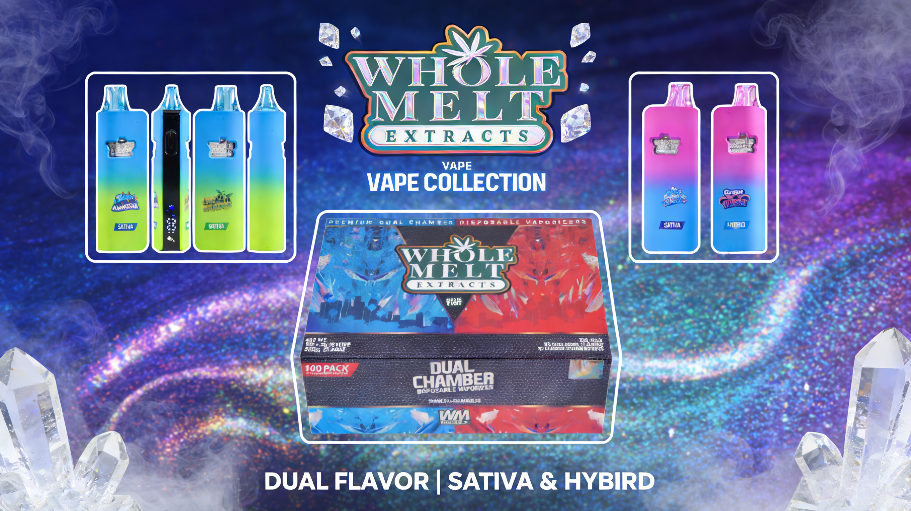
The term "THC battery" is mostly used in the market for small lithium-ion batteries that power vape hardware (often in pen form). The keyword "whole melt v7 vape" also appears in searches – often as a product/trend term. Regardless of the context, the battery and protection circuitry is crucial in determining whether a device operates consistently, safely, and predictably.
1) What are the technical characteristics of a vape battery?
A modern vape battery is not just “a battery”. It typically consists of:
- Lithium-ion cell (usually Li-ion/Li-Po, depending on the design)
- BMS/Protection Circuit (Protection circuit against short circuit, overcharging, deep discharge, overcurrent)
- Power control (voltage/power levels, partly “Smart Control”)
- Charging system (USB-C/Micro-USB + charging controller)
- Contact/Connector System (electrical transition to the heating system)
Many safety-related failures are not caused by the cell alone, but by deficient protection or charging circuits – therefore, safety standards specifically check these components.
2) Why “good batteries” make the experience more stable – without increasing risk
A) Constant power output instead of “start strong, then weak”
Lithium cells experience a voltage drop as their charge decreases. Good devices use a regulation that stabilizes the output within a safe range. The result: more consistent performance throughout the discharge cycle (less of a "drop" towards the end).
B) Protection against overheating and short circuits (Safety by Design)
Lithium systems can enter a dangerous state (thermal runaway) in the event of a fault. Therefore, protective functions are crucial:
- Overcurrent/short-circuit protection
- Overcharge/deep discharge protection
- Temperature monitoring (depending on design)
Medical case series and reports of explosions/burns caused by e-cigarette batteries demonstrate that battery incidents are real.
C) Safer charging (a huge part of the risk)
Many incidents are related to charging, incorrect power supplies, or damaged batteries. That's precisely why safety standards explicitly address the battery, charger, and protective circuits.
Example: UL 8139 assesses the safety of electrical systems in e-cigarettes/vapes, including the battery and charging system. The FDA states in its guidance that products meeting UL 8139 requirements have a reduced risk of battery-related adverse events.
3) “New & important”: Why battery issues will be under greater pressure in 2025–2027
A) EU Battery Regulation 2023/1542: Repairability/removability from 18 February 2027
The EU Battery Regulation (Regulation (EU) 2023/1542) introduces new obligations – including those concerning the removable and replaceable nature of portable batteries in products, applicable from 18 February 2027. Summaries and summaries also emphasize this 2027 requirement.
Why this is relevant: Products with permanently installed batteries (typical in disposable designs) are facing a more difficult regulatory situation. Manufacturers/brands will have to make their designs and documentation more "battery law-compliant" in the future.
B) Germany: Obligation to take back disposable e-cigarettes from 1 July 2026
The German Federal Ministry for the Environment, Nature Conservation, Nuclear Safety and Consumer Protection (BMUKN) announces: After a transition period, consumers can return used disposable e-cigarettes to all points of sale from July 1, 2026; one of the goals is to improve fire safety during disposal. The German Electrical and Electronic Equipment Act (ElektroG) foundation also mentions the take-back obligation starting July 1, 2026.
C) Fires caused by improperly disposed of lithium batteries: this is treated as a systemic problem.
The fire hazard posed by lithium batteries is a major topic of discussion in EU waste management; in Germany, figures of up to 30 fires per day are sometimes cited in collection/treatment facilities (sources: industry/association reports). This is one of the reasons why battery take-back and regulation regulations are gaining political momentum.
4) “Current data situation”: Material and emission risks of disposables
Safety isn't just a matter of "explosion yes/no". In 2025, researchers reported in ACS Central Science that some modern disposable devices can show elevated metal/metalloid emissions (including lead, nickel, and antimony) after a few hundred puffs – with potential health risks. The UC Davis summary also addresses these findings.
Why this belongs in a battery article: The battery, heating system, contacts, and alloys used must be considered as a complete system. Good battery engineering also means: material selection + manufacturing quality + protection logic.
5) What evidence should “professional” providers provide
When writing about “Science” and “Trust”, it is most effective if you refer to specific testing and documentation standards:
A) Transport: UN 38.3 (Lithium battery tests)
For transport, lithium batteries must pass design tests according to UN 38.3. The US PHMSA explains the purpose and importance of test summaries (documentation requirements in the supply chain).
B) Product safety: IEC 62133-2 (cells/batteries)
IEC 62133-2:2017 is a central safety standard for portable, sealed lithium cells/batteries (including tests for foreseeable misuse).
C) Device system: UL 8139 (battery + charging + protection circuits)
For North America, UL 8139 is an important framework that explicitly covers battery, charging, and protection systems for vapes.
6) How to cleanly integrate the keyword “whole melt v7 vape” (without risk)
If you need “whole melt v7 vape” as a keyword, keep the context technical and compliance-neutral:
- Use it as a search term, not as a product recommendation.
- Link it to Battery Safety / Standards / EU Rules / QC.
- Avoid phrases like “stronger”, “more effective”, “best high”, etc.
Example sentence (SEO-safe):
“Search queries like whole melt v7 vape show that buyers are increasingly judging devices based on hardware features – but tested batteries, protection circuits and safe charging systems are the basis for reliable performance.”
Conclusion
The “science behind THC batteries” is actually the science behind miniature lithium energy systems: cell + protection circuitry + charging electronics + material quality. Current regulations (EU Battery Directive, German take-back from July 1, 2026) and new research on disposables are increasing the pressure to deliver verifiable safety and thorough documentation as core features.
If you want, I can next create (1) a German SEO title (60-70 characters), (2) a meta description (≤300 characters), (3) 1-2 alternative, unique German focus keywords that do not conflict with your existing pages – just tell me briefly whether the article should be aimed at B2B (hardware/empty) or B2C.
Attention : whole melt v7 2g vape | whole melt 2g disposable | led disposable vape | custom vape




 English