Understanding Sluggers Disposable Vapes: Features, benefits, safe use & disposal
Disposable vapes are extremely prevalent in many markets – yet at the same time, there is more regulation, health warnings, and environmental debate surrounding them than ever before. In this article, we'll explain "what is a disposable vape" (as an SEO keyword), describe the technology behind them, and show you what to look for in products marketed as "Sluggers Disposable Vapes" from the perspective of hardware, safety, and compliance.
Important (Brand name "Sluggers")
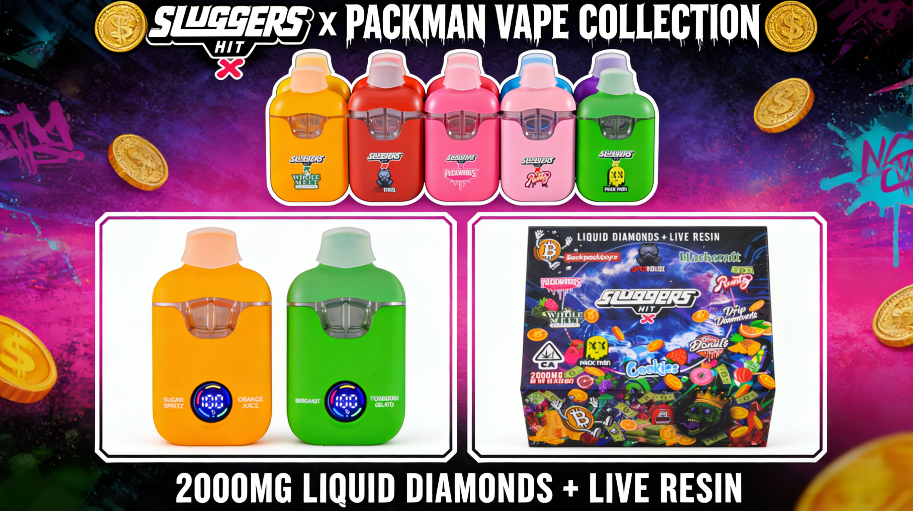
Various products appear online under the name "Sluggers," including variants marketed as containing hemp/cannabinoids and also products advertising nicotine vapes. Therefore, this article remains intentionally general (covering disposable vape principles + safety/disposal guidelines). For specific information on ingredients or claimed effects, the local legal regulations are always decisive.
What is a disposable vape? (Definition)
A disposable vape (disposable e-cigarette) is a pre-assembled, usually non-disassemblable device that:
- a battery,
- a heating element (coil),
- A liquid/reservoir system combined in a compact housing.
It's designed for convenience: no coil changes, no refilling (typically), and often features automatic draw activation. Once the battery or pod is empty, the device is disposed of – ideally through a return/recycling program (see below).
How does a disposable vape work technically?
The basic principle is always similar:
- Activation: Either automatic activation (sensor) or button.
- Power output: A small controller regulates the current/voltage to the coil.
- Heating: The heating element vaporizes the liquid → aerosol.
- Protection functions: Modern devices often have overcurrent/short-circuit/undervoltage protection and power-off cutoff (timed shutdown).
With products of questionable quality, such protection mechanisms are sometimes missing – therefore, documentation is important.
Typical features (and what they actually offer)
Disposable vapes often advertise these features:
- Automatic train control: Easy operation, fewer operating errors.
- USB-C/Rechargeable (on some models): This can help to "maximize" the device's lifespan if the battery fails prematurely – but it doesn't change the fact that it remains a disposable product.
- LED/Display: Status information (battery/remaining charge) can reduce returns, provided the display is reliable.
- Airflow design: Influences draw resistance and heat generation.
Practical tip: In retail/B2B, it's not feature overload that matters, but consistency: low failure rate, stable performance, and traceable quality control standards.
"Sluggers Disposable Vapes": What you should look for in the data sheet
Since "Sluggers" appears in different product contexts, you should systematically check each batch/SKU:
- Energie & Laden
- Akku-Kapazität (mAh), Ladeport (falls vorhanden), Schutzschaltungen.
- Sicherheits-/Qualitätsnachweise
- Serien-/Batch-Logik, QC-Protokoll, Rückruf-/Reklamationsprozess.
- Kennzeichnung & Markt-Konformität
- Altersabgabe, Warnhinweise, Sprache/Etikett, Distributor-Angaben.
- Transport & Batterie-Handling
- Für Produkte mit Li-Ion-Batterien sind sauberer Versand, Verpackung und Test-/Sicherheitsdokumentation besonders relevant.
Advantages (why disposable products sell)
From a commercial perspective, disposable vapes are attractive because they:
- have a low barrier to entry (no accessories needed),
- Promote impulse purchases,
- They often offer a clear SKU logic (flavor/variant).
However, these advantages are increasingly coming under pressure from regulations, environmental requirements, and health assessments (next section).
Health: "Not harmless" is the current consensus among reputable sources.
Authoritative health authorities are clear in their message:
- The WHO states that e-cigarettes are harmful to health and not safe; aerosols contain toxic substances, and nicotine is highly addictive.
- The CDC emphasizes that e-cigarette aerosol is not harmless "water vapor" and can contain harmful or potentially harmful substances.
- The German BfR (updated FAQ, April 2025) also takes a critical view of e-cigarettes; even nicotine-free liquids are not automatically harmless.
SEO-friendly wording (without causing panic): Disposable products are a convenience product – not a health product.
Safety: Batteries, charging, heat – the most important rules
Many incidents are caused by incorrect charging/overheating/mechanical issues. The FDA recommends, among other things:
- Charge on a clean, flat surface (not on a sofa/cushion),
- Avoid extreme temperatures (car/heat/cold),
- Do not use or charge near flammable gases/liquids.
For retail/customer support, it's worthwhile to standardize these points as a short safety card (FAQ).
Germany 2026: Disposal and return policies will become noticeably stricter.
Disposable e-cigarettes are electrical devices with batteries – if disposed of incorrectly, they can cause fires and do not belong in general waste. The Federal Ministry for the Environment published new regulations and information on this topic at the end of 2025/beginning of 2026:
- From 2026 onwards, retailers will be required to take back used disposable e-cigarettes; after a transitional period, returns should also be possible at points of sale such as kiosks and petrol stations from July 1, 2026.
- The BMUV (Federal Ministry for the Environment, Nature Conservation, Nuclear Safety and Consumer Protection) website provides background information and details on the return of electrical waste in the context of the regulations governing electrical and electronic equipment.
Consequence: "Usage" doesn't end with the last use – but with proper return/recycling.
Youth protection (Germany): Sale to minors is prohibited.
In Germany, Section 10 of the Youth Protection Act (JuSchG) stipulates that tobacco products and nicotine-containing products (and, depending on the specific product, other products/containers) may not be sold to children or minors – including regulations for mail order sales. For shops, this means: age verification (online/offline) is not a "nice to have," but a legal requirement.
Looking ahead: EU battery regulations in 2027 will increase the pressure on disposable designs.
The EU Battery Regulation includes requirements that certain portable batteries in devices must be removable/replaceable (the year 2027 is mentioned in official summaries).
For single-use products, this means that design and compliance risks will tend to increase.
Conclusion
- Disposable vapes are technically simple, convenience-driven devices – but they present real issues regarding health, safety, youth protection, and disposal.
- When discussing "Sluggers Disposable Vapes," it's crucial to first clarify which product category (nicotine vs. cannabinoid-advertised, etc.) is specifically being referred to – and then document this information strictly in accordance with market regulations.
- In Germany, in 2026, the return/disposal of products will become particularly more visible and relevant in the retail sector.
Attention : sluggers 1g+1g vape | empty sluggers vape | dual chamber disposable vape | wholesale vapes


 English