Updated: January 27, 2026 · Target audience: Adults · Purpose: Brand and market analysis
Note: This article discusses brand management, packaging, and market dynamics. It is not a guide to using, filling, or modifying devices. Brand and sports references are for illustrative purposes only and require proper licensing in practice.
The Impact of Custom Packman NFL Vape on Brand Identity and Customer Loyalty (custom packman NFL vape)
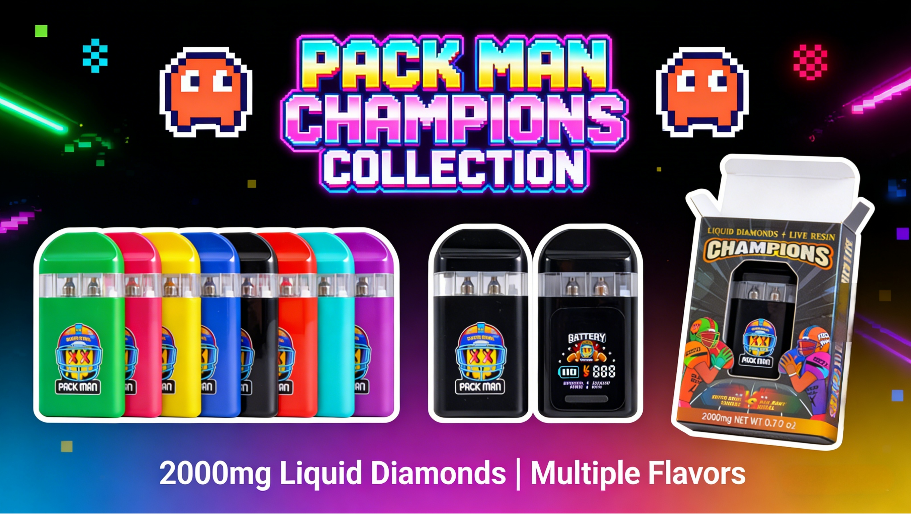
The term custom Packman NFL vape exemplifies a major trend in US vape retail: In a market dominated by disposables and characterized by increasingly rapid product cycles, hardware design itself becomes a brand platform—and thus a lever for brand identity and customer loyalty. There is little independent primary research available on this specific product name; therefore, the following conclusions are based on (1) reliable US retail sales data and (2) peer-reviewed research on brand identity, loyalty, and packaging impact.
1) Why "custom" is so powerful right now: The market is disposable-first.
US retail monitoring shows that disposable e-cigarettes now account for the lion's share of e-cigarette sales. According to a major US report (retail data via Circana), e-cigarette unit sales increased by 47.0% between 2019 and 2023; disposables "took over the market" and reached a 57.8% market share.
Another data briefing (Jan 2018–Dec 2023) also reports: Disposables increased their unit share from 26.2% (Feb 2020) to 57.2% (Dec 2023), while disposable unit sales increased by 212.4% over the same period (4.1 million → 12.7 million units).
At the same time, SKU complexity is exploding: In the six-month period ending December 2023, 6,323 different e-cigarette products were sold in the USA, of which 94% were disposables (UPCs in Circana). In such an environment, "brand recognition" is not a luxury—it's a survival strategy.
2) Brand Identity: How a custom device becomes a "physical brand guideline"
Brand codes on the shelf: color, shape, UI, packaging
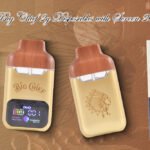
With disposable products, the device itself is often the most important touchpoint. Custom elements (form factor, surface finish, color code, screen layout, haptics, packaging design) translate brand identity into something the customer sees, touches, and photographs. Research on brand identity shows that it influences satisfaction and repurchase intention (among other things, via "lifestyle congruence").
Consistency beats "loudness": Repetition instead of a one-time hype.
Especially with fast-moving disposable products, the most important rule for customization is: same device = same perception. Consistent design cues make it easier for the buyer to find "their" product again—and reduce the cognitive load at the moment of purchase.
3) Customer Loyalty: What loyalty really means in the disposable products business
Loyalty is not just about repeat purchases—it's about willingness to pay.
Empirical research shows a clear link between brand loyalty and a higher willingness to pay (WTP): More loyal customers are more willing to pay more for their preferred brands. This is precisely the mechanism that a "custom packman NFL vape" approach (as a premium custom line) aims to monetize.
Why packaging and visual cues contribute so strongly to brand loyalty.
Packaging design (visual elements, information architecture, "premium cues") has been proven to influence purchasing decisions—and can contribute to repeat purchases through perceived quality, trust, and brand recognition.
4) “Custom Packman NFL vape”: What kind of customer loyalty do custom levers generate in practice?
- Distinctiveness: A clear "hero look" (silhouette, color palette, UI grid) creates instant recognition on the shelf and in social media feeds.
- Line Architecture: Versions (e.g., "Season Drop," "Limited Colorway") must be clearly coded to prevent confusion when customers repurchase products.
- Perceived Quality: Premium feel + clean print quality + consistent fit create the impression of a quality product—even without technical claims.
- Community Mechanics: Themed drops work because they trigger social identity (collecting, "show and tell"). This strengthens organic recommendations.
- Availability: Loyalty quickly breaks down when the desired SKU is unavailable—that's why forecasting and replenishment are essential components of every custom brand story.
5) The hard truth: In the US, the market has also become "noisier" from a regulatory perspective.
Market reports emphasize that flavors and disposables are strongly driving sales; in 2023, non-tobacco flavors accounted for 80.6% of sales in a major report.
For brand owners, this means: those who want to build loyalty need low-risk brand management (conservative claims, clear documentation, clean supply chain)—otherwise, the "customer asset" quickly becomes a "compliance liability".
6) NFL / “Packman NFL” and trademark rights: Loyalty boost only with proper licensing
If your custom concept uses NFL references (names, logos, team marks), this is not a design detail, but an intellectual property issue: The NFL explicitly states that unauthorized use of its trademarks is prohibited. Official consumer products/licensing channels exist for licensed use.
In practical terms, this means: If you include "NFL" in your product name/artwork, plan for a licensing strategy (or develop a sports-inspired design without using protected trademarks). This protects your distribution, payment processing, and platform access.
7) B2B Playbook: How to build genuine loyalty from "custom" solutions (instead of just short-term hype)
A. Define 3 challenging loyalty KPIs.
- Repeat Purchase Rate for 30/60/90 days (Retail or Distributor reorder cycles)
- Variant Confusion Rate (Exchanges, incorrect deliveries, support tickets per 1,000 units)
- Price Integrity (Discount dispersion and MAP discipline in the channel)
B. Design the custom solution in such a way that reordering is "frictionless".
- SKU System: unique versioning (color code + short name + lot/batch field)
- Packaging Hierarchy: Front: Identification; Side/Back: Variant Identifier; Case Pack: Warehouse readability
- Consistency Gate: Before each drop: Golden Sample + Print approval + In-line QC photos
C. Story, yes—but "Proof" wins.
In a market with thousands of rapidly changing products, "brand" is more than just storytelling: provide evidence (consistency, traceability, controlled variations), and then custom design can truly drive repurchase intention.
Conclusion
The custom Packman NFL vape approach can significantly strengthen brand identity and loyalty—because disposable vapes are dominant in the US market, making the device/packaging the most important brand touchpoint. The data shows that disposables are market leaders, sales are high, and the SKU density is extremely high. This is precisely why a consistent custom system (design codes, variant logic, reorder mechanism) directly contributes to repeat purchases and willingness to pay.
The key is implementation: Design + Supply + Compliance must all align—and when it comes to NFL-related products, the risk is often higher than the short-term loyalty gain without clear licensing.
Attention : packman NFL disposable 2g | pac man led vape | led disposable vape | cheap vape
 English