Understanding the Crybaby Disposable Vape in 2026: What You Need to Know
In 2026, "crybaby disposable" is not just a keyword, but represents a product category that is simultaneously in high demand, more heavily regulated, and subject to greater scrutiny than just a few years ago. Anyone working with disposable vapes in retail, distribution, or e-commerce must clearly distinguish between three things: product promises, regulations/compliance, and the real-world risks (youth protection, waste, product safety).
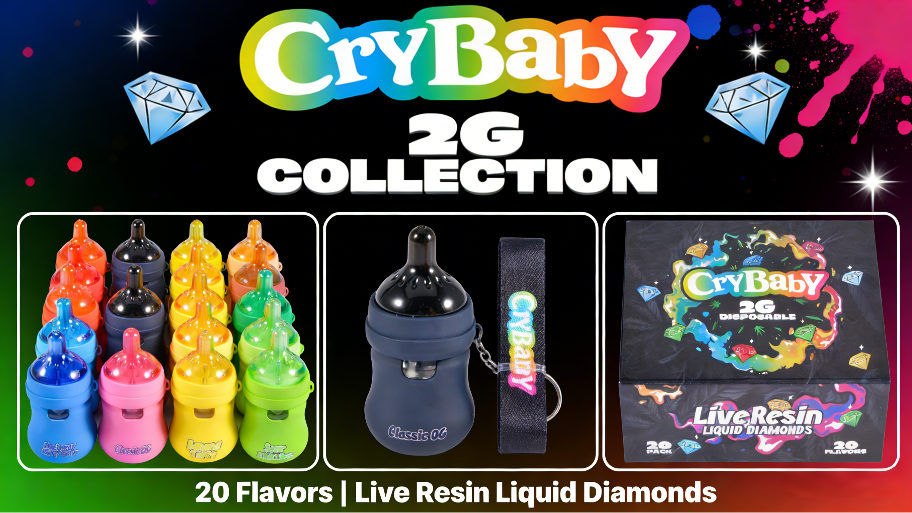
Important context: The name/brand "crybaby disposable" is sometimes used inconsistently in the market (regarding models, puff counts, and "editions"). Therefore, this article focuses on what truly matters in 2026: requirements, testing criteria, and reliable market data – not on unverified specifications from individual shop listings.
1) What "disposable" practically means in 2026 (and why that's important)
A "disposable" vape essentially means: pre-filled, not (or only partially) refillable, and often "plug-and-play." This very simplicity makes the category attractive – and at the same time a target for regulators, because it lowers the barrier to entry and generates enormous amounts of electronic waste.
In the EU, e-cigarettes containing nicotine liquid are highly standardized. The Tobacco Products Directive sets clear limits, including (for example, a maximum of 20 mg/ml of nicotine, a maximum tank/cartridge capacity of 2 ml, and a maximum refill container size of 10 ml), and also requires childproof, leak-proof solutions as well as comprehensive product and ingredient information.
2) Regulation: By 2026, "single-use" products will no longer be a free-for-all in Europe.
If you are marketing or distributing "crybaby disposable" in Europe/UK, the biggest change is: Disposable vapes are being completely removed from sale in certain countries.
United Kingdom: Sale of single-use plastics banned from June 1, 2025.
The UK government has banned the sale and distribution of single-use vapes from June 1, 2025, citing the measure as a way to combat youth consumption and littering.
This means that from 2026 onwards, anyone distributing "crybaby disposable" vapes in the UK must use compliant, reusable designs – otherwise, the product will simply not be marketable.
France: Ban in effect since February 26, 2025
Since February 26, 2025, France has prohibited the sale/offering/distribution of "puffs" (disposable e-cigarettes), i.e., pre-filled devices that are not refillable – regardless of whether the battery is rechargeable.
Germany/EU: strict product guidelines + labeling requirements
For Germany, the following is particularly relevant: The BfR (Federal Institute for Risk Assessment) confirms, among other things, the 20 mg/ml upper limit and emphasizes the obligation to declare all ingredients (via the Tobacco Products Act/Regulation), as well as the fact that while e-cigarettes generally contain fewer harmful substances than tobacco smoke, health risks remain.
3) The latest "hard numbers": Why disposable products are so much in the spotlight.
If you want to have a serious discussion about disposable vapes (including "crybaby disposable") in 2026, there's no way around looking at the data on young people.
The US FDA publishes the key figures based on the National Youth Tobacco Survey (NYTS). 2024:
- 5.9% of middle and high school students (≈ 1.63 million) currently (in the last 30 days) used e-cigarettes.
- Among current youth users, disposable e-cigarettes were the most frequently used type of device (55.6%).
- 87.6% of current youth users used flavored e-cigarettes; "fruit" was the leading flavor.
- 26.3% of current youth users used e-cigarettes daily.
These data explain why disposable vapes are considered a "high-risk" product form from a regulatory perspective: Disposables are dominant, flavors are dominant, and a significant proportion of users use them very frequently.
4) "Crybaby disposable" 2026: The due diligence check (suitable for B2B)
If you are selling "Crybaby disposable" commercially or listing it as a supply chain participant, the most important question is not "how many puffs," but: Is the product even legally marketable in your target country – and how do you prove that?
A) Law & Compliance (EU/DE logic)
- Volume/Nicotine compliance (EU TPD): 2 ml tank/cartridge, 20 mg/ml maximum nicotine, etc.
- Child safety lock & leak protection (TPD requirement) + clear packaging/leaflet information.
- Ingredient transparency and labeling (Germany/EU): Ingredients must be declared; health risks remain relevant in communication.
B) Product safety & complaint rate (practically crucial)
- Batch and traceability logic: Batch number, unique identifiers, clean QC documentation.
- Leak Rate / Transport Stability: Single-use devices often fail in the B2B market not due to marketing issues, but due to returns (leakage/DOA).
- Batteries & Disposal: Lithium batteries pose an operational risk (storage, return, fire hazard).
C) Authenticity & Brand Risk
Disposable vapes are extremely susceptible to "brand-like" listings and counterfeit products. By 2026, you will need a clear internal policy on this:
- Purchases only with manufacturer's documents / verifiable origin.
- Verification/Anti-counterfeiting (if available) as a mandatory process
- No "speculative copywriting" from third-party shops without supporting evidence.
5) Environment & Waste Management: A key driver behind the bans
The UK's Defra presentation is particularly clear on this point: single-use vapes generate massive amounts of waste; Material Focus estimated nearly 5 million disposable vapes were discarded/thrown away per week (UK, "last year" according to Defra).
This is precisely the kind of "hard" environmental argument that could lead to stricter regulations in other markets by 2026.
Conclusion: What you really need to know about "crybaby disposable" in 2026
"Crybaby disposable" can generate keyword traffic – but in 2026, the keyword will not be the deciding factor, but rather:
- Market access (bans/restrictions in countries like the UK and France)
- Proof of compliance (TPD limits, labeling, childproof, leakproof)
- Public health reality (Youth data: disposables, flavors, daily use)
- E-waste pressure as a business risk (waste volumes as a political trigger)
Attention : crybaby 2g disposable | wholesale crybaby vapes | custom 2ml thc vape | custom vape
 English