The Evolution of ChoiceLAB Pen Cartridges: From Classic 510 Cartridges to Modern Innovations
Anyone searching for a **Choicelab pen cartridge** today is, in reality, no longer looking merely for a cartridge. Instead, they are seeking a complete system—one comprising hardware, oil quality, testing standards, packaging, traceability, and regulatory reliability. This is precisely where the true evolution lies: the market has evolved from simple, pre-filled 510 cartridges into products that are more heavily regulated, technologically sophisticated, and data-driven. This is not merely a niche observation, but rather part of a broader transformation within the vape and cannabis markets. In Canada, as of 2024, 37% of cannabis consumers reported vaping cannabis; concurrently, the proportion of individuals sourcing their cannabis from legal channels rose to 72%. In the U.S., CDC data further indicates that vaping is a particularly significant trend among cannabis consumers, especially among young adults.
1) The Traditional Phase: Simple 510 Cartridges, Distillate, Standardization
The early benchmark for a **Choice Labs pen cartridge** was the classic pre-filled cartridge: typically distillate-based, connected to a reusable battery, and cross-platform compatible via a 510-thread connection. Current industry literature continues to describe this very format as the fundamental architecture of the market: cartridges and pods are typically pre-filled, frequently 510-compatible, and utilize built-in heating elements—often ceramic- or quartz-based. Public product listings for Choice Labs demonstrate that the brand was active in this exact classic segment, offering 0.5g, 1g, and live resin cartridges.
The advantage of this traditional format was clear: ease of use, established battery standards, and a relatively straightforward product design. However, this very simplicity had its limits. Earlier cartridges were heavily focused on functionality; issues such as comprehensive transparency, packaging logic, QR-code information layers, or refined risk management were far less prominent than they are today. The fact that modern markets now operate differently is clearly demonstrated by regulatory and safety requirements in Canada and Michigan.
2) From Product to Ecosystem: Why the Cartridge Must Do More Today
Demand has shifted. According to the CDC, in 2022, 15.3% of adults across 22 U.S. states and two territories reported current cannabis use; among these users, vaping—at 30.3%—was already the third most common method of consumption, following smoking and edibles. Among 18- to 24-year-olds, the share of vaping users was even higher, at 44.7%. Nearly half of users utilized multiple consumption methods concurrently. This means that today, cartridges compete not only with other cartridges but also with edibles, dabbing, and disposables within a much more complex mix of consumption methods.
Canada’s long-term data also reflects this structural shift. While cannabis smoking declined from 89% in 2018 to 69% in 2024, the share of edibles and beverages rose to 57%; vaping remained a consistently relevant channel at 37%. For brands and manufacturers, this means that a modern choicelab pen cartridge must not merely "work," but must hold its own in a market where consumers switch between various delivery methods, potency levels, and expectations.
3) Modern Innovations: Better Heating Systems, New Formats, More Options
Technically speaking, the greatest innovation lies not merely in "stronger oil," but rather in the combination of materials, thermal behavior, and device architecture. Technical literature describes modern cartridges and pods as pre-filled systems featuring a built-in coil—typically ceramic or quartz—which are often 510-compatible, though some also utilize proprietary pod designs. Depending on the specific device, these systems may employ distillates, terpenes, live-resin-like formulations, or other extract profiles. Furthermore, modern systems can be either puff- or button-activated and, in some instances, support various temperature modes.
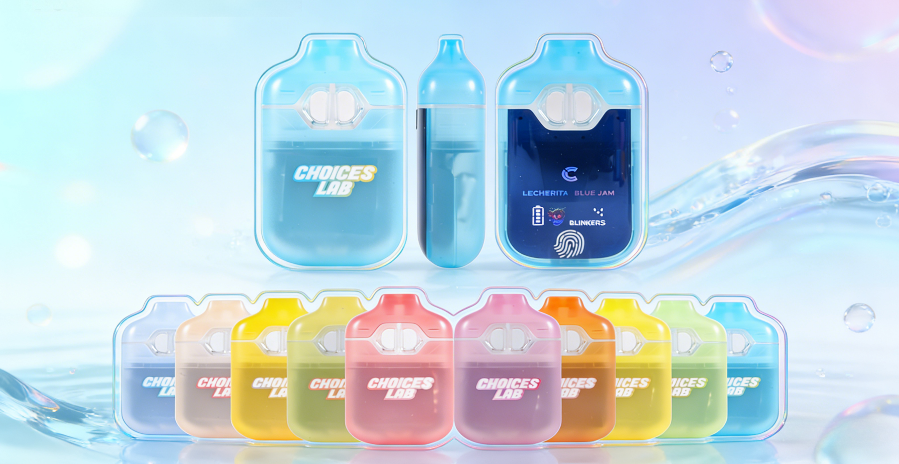
This very trend is evident in publicly accessible Choice Labs listings: alongside classic 1-gram cartridges, 2-in-1, dual-flavor, and disposable formats are now being advertised; individual product pages even list V2 models featuring screens, as well as combinations of live resin and liquid diamonds. However, such claims should be interpreted as market positioning on product pages, rather than as independent validation of quality. Nevertheless, they remain significant, as they reveal the direction in which the segment is heading: away from the mere standard cartridge, and toward higher capacities, hybrid extract concepts, and more sophisticated hardware.
4) The true innovation today is: compliance, testing, and traceability.
Perhaps the most significant innovative leap is regulatory in nature. In Michigan, Standard Operating Procedures for required safety testing must comply with the standards ISO/IEC 17025:2017 and Good Laboratory Practice. Furthermore, the Cannabis Regulatory Agency added MCT oil as a target analyte for marijuana vape cartridges; this new testing requirement took effect on October 1, 2024. A draft of the 2025 administrative rules also stipulates that labels may use QR codes to link to additional product information, provided that such information is factually accurate and specifically associated with the respective product.
Canada, too, demonstrates just how far the market has moved away from the old "cartridge-plus-battery" logic. Health Canada mandates plain packaging, child-resistant containers, standardized warning labels, and clear THC/CBD labeling for cannabis products. Concurrently, vaping products and cannabis-related vaporizers are subject to the consumer product safety regime, entailing documentation, reporting, and potential product recall obligations. Thus, modern innovation no longer signifies merely new hardware, but rather verifiable safety throughout the entire product lifecycle.
5) Why Material Quality and Batch Control Are So Important Today
It is precisely here that research demonstrates why the modern choicelab pen cartridge can no longer be defined solely by its aroma or potency. A study published in 2025 regarding legal Canadian cannabis vape products found that metals from device components—specifically cobalt, nickel, and zinc—contribute significantly to batch-to-batch variability. Furthermore, metal particles such as Co, Cr, Ni, Pb, Sn, and Zn were detected in the generated aerosols. The authors explicitly attribute this to the hardware components of the cartridges.
An earlier Canadian study revealed the presence of metal particles even in unused cannabis vape pens. In illicit samples, lead levels of up to 50 µg/g, nickel up to 677 µg/g, and zinc up to 426 µg/g were measured. The conclusion was unequivocal: contamination can originate not only from the extract itself but also from the device in which the extract is packaged. This explains why modern innovation lacks credibility without rigorous material selection, batch management, and final product testing.
At the same time, a risk analysis published in 2026 regarding regulated Canadian inhalation products indicates that legally and quality-controlled manufactured cannabis vape products can, overall, pose a low health risk with respect to heavy metals, provided that Good Production Practices are adhered to. The decisive factor, therefore, is not the buzzword on the packaging, but rather whether a product is manufactured within a robust quality and control system.
6) What this specifically means for Choice Labs and the future of the Choice Labs pen cartridge.
For Choice Labs itself, the public record illustrates precisely this tension. In a Michigan CRA licensing report dated August 2025, **Choice Labs, LLC** appears with an approved renewal of its Processor license. Concurrently, in February 2026, the CRA issued a Consent Order regarding an active Adult-Use license held by Choice Labs. This is less of a footnote than a signal of how the market operates today: even established players are judged not merely on product design, but on their enduring regulatory resilience.
Added to this is the sheer size of the market. In December 2025, Michigan recorded 273 active processor licenses; concurrently, processors held an inventory of more than 5.21 million fluid ounces of infused liquids. In such an environment, victory does not automatically go to the loudest brand, but rather to the brand that best integrates hardware, extracts, labeling, testing, and audit readiness. This is precisely why the modern choicelab pen cartridge is less of a standalone product and more of a promise of quality—one that must be delivered upon technically, analytically, and regulatorily.
Conclusion
The evolution of the choicelab pen cartridge can be summarized in a single sentence: from a simple 510 cartridge to a regulated, material-critical, and data-driven product platform. In the past, compatibility and convenience were the primary considerations. Today, however, the focus has expanded to include coil materials, extract quality, batch consistency, child-resistant packaging, warning labels, QR-code transparency, and robust laboratory protocols. Public-facing product pages indicate that Choice Labs is shifting toward a dual-format strategy, a disposable-centric approach, and more highly segmented hardware; yet the most compelling signals originate from the realms of research and regulation. In these areas, the trajectory is clear: the next stage of innovation is not merely about being more potent or stylish, but about being more rigorously tested, better documented, and more credibly monitored. Even in Canada—where no domestic cases of cannabis-related vaping-associated lung injury (VALI) were reported in 2024—52% of all confirmed reports involving legal products were linked to cannabis extracts; this serves as yet another reminder that, while modern inhalation products have certainly matured, they remain far from risk-free.
Attention : choicelab fingerprint 2g vape pen | choice lab vape | 2g disposable vape | cheap vape
 empty 1g vape
 empty 2g vape
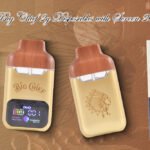 empty 3g vape
 empty dual chamber vape
 empty led vape
 USA STOCK VAPE
 EU German stock vape