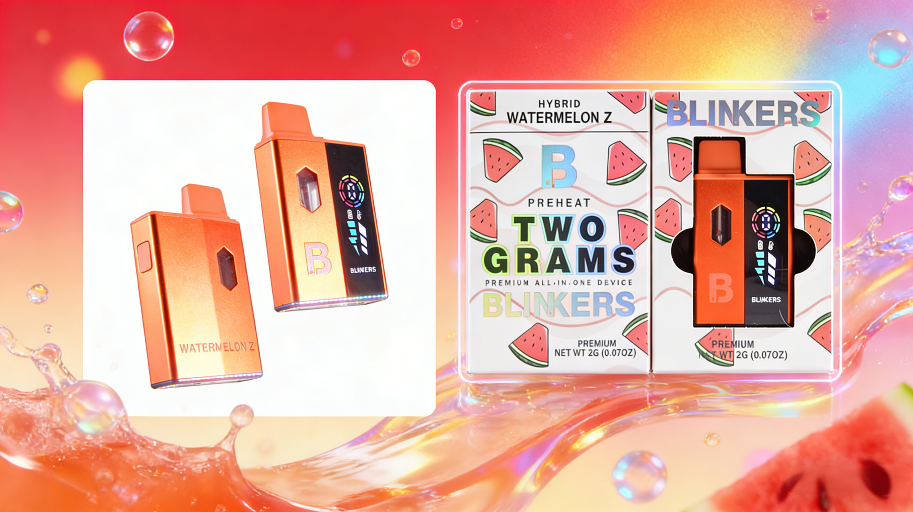
The Rise of Blinkers Disposable Weed Pens: When Convenience Meets Quality
Those searching for “blinkers pen disposable” are typically interested in a product promise that is appearing with increasing frequency in the cannabis market: a pre-filled, compact device that can be used with minimal effort while simultaneously being perceived as “high-quality.” Yet, this is precisely where the crucial point lies: In 2026, quality in a disposable device can no longer be defined solely by taste, potency, or design, but—above all—by regulation, product testing, material quality, and battery safety. At the same time, current demographic data indicates that vaping is firmly established as a method of consumption within the cannabis market. In the USA in 2022, vaping was the third most common method of consumption among adults who currently use cannabis, accounting for 30.3%; among those aged 18 to 24, this figure was even higher, reaching 44.7%. In Canada, 2024 data showed that 37% of consumers reported vaporizing cannabis using a vape pen or e-cigarette.
1. Why Disposable Weed Pens Have Gained Such Significant Popularity in the First Place
The rise of these devices is primarily linked to a shift in consumer behavior. The latest CDC data shows that adults today consume cannabis through multiple channels: smoking remains the most common method, but edibles, vaping, and dabbing have long since come to play a significant role. In other words, disposable pens are not growing in a vacuum, but rather as part of a market where convenience, portability, and immediate readiness for use are in high demand. This is precisely why search terms such as blinkers pen disposable are appearing with increasing frequency.
Canadian data also points to a more mature market. At the end of 2024, Health Canada reported that 72% of respondents source cannabis from legal channels, up from 37% in 2019. This is significant because the rise of such devices is not merely a matter of lifestyle or technology, but is closely tied to legal distribution channels and state-regulated markets.
2. Was Nutzer unter „Convenience“ tatsächlich verstehen
Die Bequemlichkeit eines Disposable Pens liegt vor allem in drei Punkten: Das Gerät ist in der Regel vorgefüllt, einfach zu transportieren and ohne separates Nachfüllen nutzbar. Die CDC beschreibt Disposable E-Cigarettes allgemein als vorgefüllte Geräte, die in manchen Fällen sogar wiederaufladbar sind, obwohl sie nicht zum Nachfüllen gedacht sind. Übertragen auf cannabisbasierte Pen-Systeme erklärt das, warum gerade unterwegs genutzte Disposables als praktisch wahrgenommen werden: Sie reduzieren den Bedienaufwand und die Zahl der Einzelkomponenten.
However, "practical" is not the same thing as "trouble-free." Precisely because many of these devices contain lithium batteries, mobility immediately becomes a safety issue. The FAA warns that, due to their lithium batteries, electronic smoking devices are classified as hazardous materials and can pose a risk of smoke, fire, or extreme heat. In 2024, the FAA recorded 89 lithium battery incidents in air travel; by June 30, 2025, 38 more had already been added. Thus, convenience always has a technical and safety-related flip side.
3. What “Quality” Really Means for a Blinkers-Style Disposable in 2026
The term "quality" is often used very loosely within the cannabis vape market. In a meaningful regulatory sense, however, quality today primarily signifies: **legal origin, comprehensive product testing, clean hardware, transparent labeling, and consistent batch control.** Michigan serves as a particularly clear illustration of the growing importance of these factors. The state's Cannabis Regulatory Agency clarified that, in the case of vape cartridges, the **final form of the product** must be tested; in this context, "final form" explicitly refers to the concentrate contained within the e-cigarette or vaping device itself. Furthermore, MCT oil was introduced as a target analyte for marijuana vape cartridges; mandatory testing for this substance has been in effect since **October 1, 2024**.
Official figures from Michigan also demonstrate just how large this market segment has become. In the monthly report for December 2025, processors reported more than 5.21 million fluid ounces of infused liquids. While this does not prove that every single product is of high quality, it clearly shows that inhalable and liquid cannabis products are no longer a niche segment. The larger this market grows, the more critical robust quality standards become.
Another indication comes from Canada: Health Canada now regularly publishes annual reports on reported adverse effects associated with cannabis products from the legal market. The very existence of this reporting system demonstrates that even regulated products are not automatically risk-free. Quality, therefore, does not mean "without risk," but rather "better controlled and traceable."
4. What Research Reveals About Hardware and Ingredients
Particularly with disposable pens, quality is not merely a matter of the oil, but also of the device components. A study published in 2025 regarding legal Canadian cannabis vape products demonstrated that metals from device components—specifically cobalt, nickel, and zinc—can contribute significantly to batch-to-batch variability. This is significant because it shows that, even in regulated markets, the hardware is an integral part of the quality equation—not merely the extract's formulation.
A risk analysis of regulated Canadian inhalation products, published in 2026, offers a nuanced assessment: for well-controlled, regulated products, the overall risk posed by heavy metals can be low. However, this does not constitute a blanket all-clear; rather, it serves as an argument for why regulation, batch control, and material monitoring are so critical. Thus, quality is not created by marketing terms, but by verifiable production and testing processes.
At the same time, vaping, as a class of devices, remains not harmless to health. As recently as March 2026, the FDA reiterated that there are no safe tobacco products—including ENDS—citing, among other issues, overheating, fires, explosions, and lung damage as reported safety concerns. While this FDA statement formally pertains to nicotine products, it remains relevant for the assessment of the device platform, as technical issues regarding batteries, aerosols, and heating are of a similar nature.
5. What to Look Out for When Classifying a Disposable Pen Today
Anyone evaluating a product like a **Blinkers disposable pen** should therefore not primarily ask whether the device is "strong" or "stylish," but rather whether it originates from a **legal and traceable distribution channel.** The latest data from Health Canada clearly demonstrates that legal sources have now become the standard—a factor far more relevant to product quality than mere marketing claims.
Equally important is the question of whether the product is sold in a fully tested final form and whether regulatory requirements for inhalable products are met. The Michigan approach—featuring final-form testing and additional target analytes for vape cartridges—serves as an excellent example of how quality is operationalized in practice.
When traveling, a third point comes into play: battery safety and disposal. The FAA points out that vapes on aircraft must not be treated as freely as ordinary small electronic devices; furthermore, in early 2026, the EPA explicitly emphasized once again that e-cigarettes and similar devices do not belong in household trash or recycling bins, as damaged lithium batteries can trigger fires. Therefore, anyone who highlights the convenience of a disposable pen should also take into account its disposal and safety implications.
Conclusion
The rise of Blinkers disposable weed pens is emblematic of a broader trend within the cannabis market: convenience remains a powerful driver, but quality is increasingly being defined by regulation and product safety. The latest official data indicates that vaping remains a significant method of consumption, that legal sources have gained prominence, and that quality considerations today extend far beyond mere taste or potency. The central focus has now shifted to device safety, material quality, final product testing, sourcing, and disposal. Precisely for this reason, a term like "Blinkers disposable pen" should not be viewed solely through the lens of convenience, but always—and equally—through the lens of verifiable product quality and risk management.
Attention : blinkers 2g vape | blinkers vape bulk | screen vape disposable | thc vape
 empty 1g vape
 empty 2g vape
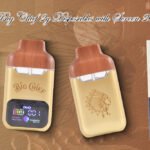 empty 3g vape
 empty dual chamber vape
 empty led vape
 USA STOCK VAPE
 EU German stock vape