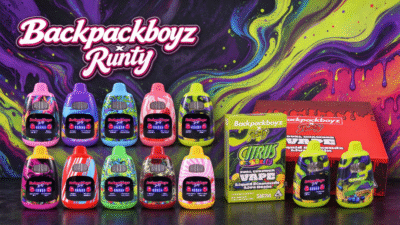
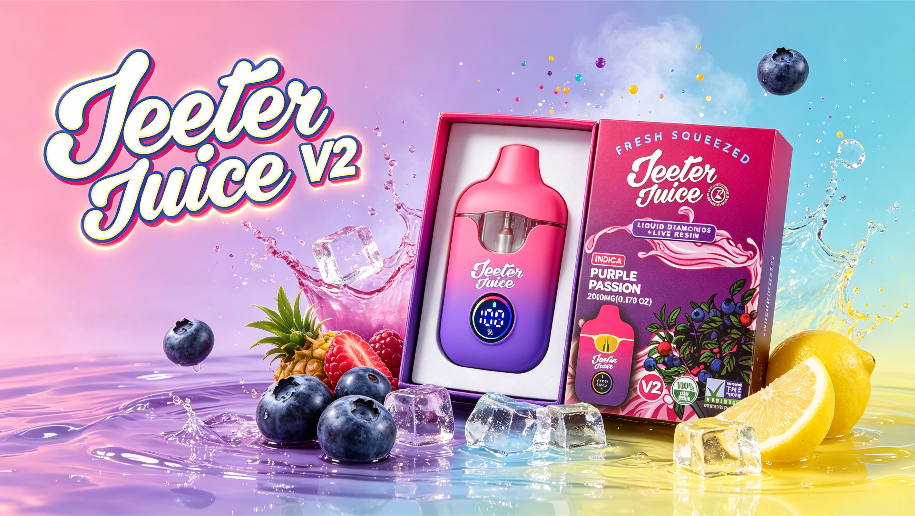
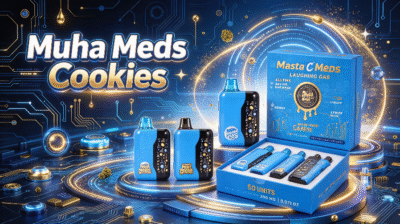
Anyone looking for the best Jeeter Juice V2 510 cart battery is rarely just looking for a battery with the highest possible capacity when making a professional purchase.
For wholesalers, distributors, vape brands, importers, and OEM clients, it is primarily a matter of the hardware as a whole:
Is the 510 hardware technically mature, well-made, suitable for reproducible series production, and reliably available in the long term?
This is precisely where the B2B perspective differs significantly from a typical consumer review.
A consumer might be interested primarily in design, size, or ease of use. A professional buyer, however, must also assess whether a product can be manufactured consistently—even when produced in quantities of several thousand or tens of thousands of units.
This is particularly relevant for the Jeeter Juice V2 hardware. The version discussed here is empty vape hardware rather than a pre-filled product. At the same time, it is based on an established, market-validated hardware design rather than a completely new, untested mold.
For B2B customers, this very maturity can be a significant advantage: less development uncertainty, greater production experience, and a more predictable basis for recurring bulk orders.
What defines high-quality Jeeter Juice V2 510 hardware?
A professional valuation does not begin with the unit price.
It begins with the interaction of the key hardware components:
510 connection + battery + electronic control + heating system + housing + assembly quality + quality control.
This systems perspective is particularly relevant because the market remains heavily focused on the 510 standard.
In early 2026, Headset reported that 510-threaded hardware accounted for 91.3% of US cartridge sales. Proprietary systems remained significantly smaller by comparison.
For purchasers, this means: A well-developed 510 solution is based on a highly established hardware ecosystem.
However, that alone does not make a battery high-quality.
A good Jeeter Juice V2 510 battery should meet several requirements simultaneously:
precise mechanical fit;
stable electrical connection;
consistent energy supply;
reproducible heating behavior;
clean component assembly;
selection of robust materials;
controlled manufacturing;
transparent QC processes;
and a production structure suitable for repeat orders.
The crucial term is consistency.
For B2B orders, it is not enough for five samples to perform well; serial production must remain as close as possible to the quality of the approved samples.
Key features at a glance
510 compatibility and stable connection
At first glance, a 510 connection looks like a simple threaded connection.
For professional hardware, however, it is a critical contact point between the battery and the cartridge.
A high-quality design should enable a mechanical fit that is as uniform as possible. Factors playing a role in this include the following:
Thread tolerance;
Height and position of the center pin;
Contact surface;
Installation depth;
Stability of the connector;
and the tolerances between individual production batches.
A connection can fit mechanically and yet be electrically unreliable.
Conversely, a battery can function electrically even though different cartridges cannot be inserted properly from a mechanical standpoint.
Therefore, B2B buyers should not simply accept the label **“510 compatible.”**
A more meaningful question is:
With which cartridge dimensions and tolerances was the hardware actually tested?
This is particularly important for brands with multiple cartridge SKUs. The better the hardware performs across various compatible products, the easier portfolio and inventory management can become later on.
Consistent battery performance
When it comes to batteries, the conversation often starts with mAh.
That is understandable, but short-sighted from the perspective of professional procurement.
A higher capacity rating does not automatically mean better hardware.
At least as important are:
actual capacitance tolerance;
Voltage stability;
Behavior under load;
Cell quality;
Charging behavior;
Low-voltage cutoff;
Protection circuits;
and consistency between production batches.
A power supply that is as stable as possible is crucial for the performance of a vape hardware system, because the battery, electronics, and heating element work together.
If the output power varies significantly between devices, heating behavior can also become less consistent.
Professional buyers should therefore not only ask:
"How many mAh does the battery have?"
Rather:
"What tolerances apply to serial production, and how is the electrical performance tested?"
This second question is often more important, especially for larger bulk orders.
Uniform heating performance
A high-quality Jeeter Juice V2 510 battery should be capable of consistently powering the connected heating system.
The goal is not maximum performance.
The goal is controllable and consistent performance.
Depending on the cartridge design, varying resistances, heating technologies, and formulations can place different demands on the electrical power supply.
Therefore, buyers should check, for example:
intended voltage range;
Output tolerance;
supported resistance level;
Behavior under load;
Protection against abnormal resistance;
Shutdown logic;
and, where applicable, different performance levels.
For OEM customers, it is also important not to test hardware in isolation.
The battery should be qualified together with the cartridges or the hardware system in which it is intended to be used.
A good type examination therefore answers not only:
"Is the battery working?"
Rather:
Does the battery work reliably with our intended hardware configuration?
High-quality hardware design
With vape hardware, the design often determines how well a product can maintain its specifications during long-term mass production.
B2B buyers should therefore also evaluate the mechanical aspects.
This includes:
Material Quality The housing, connector, internal mounts, and other components should be suitable for the intended application.
Component Fit Components should be cleanly joined and exhibit minimal unnecessary tolerance variations.
Gehäuseverarbeitung Spalte, Oberflächen, Beschichtung, Button- oder Indicator-Positionen und Connector-Einbau beeinflussen die wahrgenommene Produktqualität.
Internal Design The placement of the battery, PCBA, wiring, and mechanical components should be designed to ensure stable serial assembly.
Producibility A design may be visually appealing yet difficult to produce consistently.
For professional buyers, therefore, a product with a mature design is often more attractive than a complex new design whose suitability for mass production has not yet been sufficiently tested.
Clean workmanship and assembly quality
A good mold alone does not guarantee successful series production.
Installation is equally important.
Assembly quality includes, among other things:
correct component seating;
clean electrical contacts;
reproducible connector assembly;
controlled bonding;
correct positioning of internal parts;
Housing closure;
and final inspection.
Especially with bulk orders, minor assembly deviations can have significant consequences.
An error that occurs only once in 100 units can mathematically affect as many as 1,000 units in an order of 100,000 pieces, assuming the same error rate persists.
Therefore, a professional supplier should be able to explain not only how a device is constructed, but also:
How is it verified that serial production corresponds to this configuration?
Leakage Resistance and Quality Control
Vape hardware is often marketed with claims such as "leak-proof" or "100% leak-free."
For professional B2B communication, such absolute statements make no sense without reliable test data.
It is better to speak about leakage resistance and the underlying design.
A leak-resistant design can be supported, for example, by:
precise fits;
suitable sealing materials;
controlled assembly;
stable reservoir geometry;
suitable insert design;
and defined QC procedures.
However, the practical test is the decisive factor.
A buyer should ask:
Under what conditions was leakage tested?
How many samples were tested?
How long were the devices stored?
Wurden unterschiedliche Temperaturen berücksichtigt?
What is the acceptable error rate in production?
This is where the difference between marketing and procurement becomes apparent.
A marketing text says:
“Excellent leak-proof design.”
A professional purchasing department asks:
"What test method and what results lie behind this statement?"
Why a market-validated Jeeter Juice V2 mold is attractive to B2B buyers
This is one of the most important aspects when choosing Jeeter Juice V2 hardware.
Not every piece of new hardware is automatically better.
A completely newly developed design can offer innovative features, but naturally entails more open variables.
This may include:
Tool adjustments;
Material optimization;
Assembly problems;
Tolerance corrections;
unexpected vulnerabilities;
Changes to production parameters;
and further iterations between sample and mass production.
The situation is different for a mature, market-validated hardware structure.
The design has already been manufactured, assembled, and put into practical use. As a result, there is more empirical data regarding production and the critical components.
Newly developed hardware vs. mature hardware
Newly developed hardware
Newly developed hardware
More development variables
Better-known production structure
Tooling potentially still undergoing optimization.
Established mold
Less experience with series production
More practical manufacturing experience
Higher risk of late design changes
Design that is easier to assess
The production process first needs to stabilize.
More proven process structure
Interesting for maximum customization
Interesting for faster B2B procurement
This does not mean that a market-validated mold is automatically error-free.
Rather, it means that certain development risks can already be better assessed.
This can create several advantages for wholesalers and vape brands.
Reduced development uncertainty
Anyone who does not need to start a completely new hardware project reduces the number of unknown variables before the first bulk order.
This can simplify product qualification.
Greater existing production experience
A manufacturer that already regularly produces a hardware structure typically has a better understanding of critical assembly steps and tolerance ranges than with a completely new design.
More predictable serial production
For B2B buyers, it is not only important what a sample looks like.
The more important question is:
How likely is it that the next order will meet the same specification again?
An established production design creates a better starting point for this.
Suitable for repeat orders
Wholesale rarely operates through a single order.
A successful product requires:
Initial order → reorder → subsequent production batches → long-term availability.
A mature hardware design is therefore particularly attractive when a buyer is planning a long-term supply strategy.
Less tooling and development work
With an existing mold, the focus can be placed more strongly on:
Hardware configuration;
branding;
Packaging;
Quality standard;
and production planning
...be laid, instead of first financing a complete development process.
For many wholesalers, this very balance between customization and existing production readiness is attractive.
Why design maturity is also important for QC
An established design also facilitates the setup of repeatable testing processes.
If the design and component structure are known, quality control can be more specifically targeted at typical critical points.
These may include, for example:
510 connector test;
Activation test;
Voltage test;
Charging test;
Housing inspection;
Button/indicator test;
Battery check;
and cosmetic inspection.
The major B2B advantage is not that a defect can never occur.
That would be unrealistic.
The advantage lies in the fact that the process, defect patterns, and relevant inspection points can be better understood.
This improves the foundation for consistent series production.
Golden Sample and Locked BOM: important for long-term procurement
Even with mature hardware, a professional buyer should not rely solely on the product name.
A good procurement process should define a golden sample.
This represents the approved product quality.
Even more important is the connection to a Locked BOM (Bill of Materials).
This may specify, for example:
component
Points to be documented
Battery Cell
Manufacturer, model, capacity
PCBA
Version and relevant components
510 Connector
Design and Tolerance
Housing
Material and finish
Charging System
Interface and electrical specifications
Indicator
Execution and logic
Internal Components
released configuration
This prevents a buyer from approving a good sample while subsequent serial production is silently carried out using other critical components.
Ein professioneller Lieferant sollte deshalb einen nachvollziehbaren Change control process anbieten.
Battery Safety und Transportdokumentation
Für international agierende Einkäufer gehört auch die Lithium-Batterie-Dokumentation in den Beschaffungsprozess.
The U.S. Pipeline and Hazardous Materials Safety Administration states that lithium cells and batteries offered for transport must have passed the relevant design tests in accordance with the UN Manual of Tests and Criteria, Section 38.3. Manufacturers must make the corresponding test summaries available upon request.
A simple statement like:
UN38.3 compliant
is therefore less informative than the actual document.
B2B buyers should consider:
which battery model is documented;
which manufacturer is named;
which test reference is used;
and whether this model actually matches the production BOM.
In 2026, PHMSA once again clarified that the UN 38.3 testing requirements remain a relevant component of the lithium battery regulations.
This is particularly relevant for importers, distributors, and companies that move hardware through international supply chains.
UL 8139 as an additional technical reference framework
Not every vape hardware project automatically requires UL certification.
Nevertheless, UL 8139 can offer a meaningful evaluation framework for professional purchasing and engineering teams.
UL Solutions describes the standard as a testing framework for the electrical systems, heating systems, batteries, and charging systems of vape devices.
This illustrates a fundamental point:
A good vape battery should not be viewed in isolation.
Quality arises from the interaction of the entire electrical system.
Empty vape hardware for wholesalers, brands, and OEM clients.
The Jeeter Juice V2 hardware described here is empty hardware.
It contains no pre-filled material and is offered as a hardware component for professional B2B projects.
The product is therefore aimed in particular at:
Vape wholesaler;
Hardware distributors;
Importers;
Trademark owner;
Wiederverkäufer;
OEM/ODM customers;
and companies with their own legitimate production or filling concepts.
For these buyers, the advantage of a mature hardware platform lies in not having to start from scratch.
An existing, market-validated mold can serve as a basis and subsequently—depending on the production options actually available—be processed via, for example:
Logo;
Housing finish;
Colors;
Packaging;
labeling;
and other OEM/ODM elements
be adapted to the specific project.
In doing so, the hardware combines two requirements that are important for B2B customers:
Existing production readiness + possibility of brand customization.
Jeeter Juice V2 Empty: Why Empty Hardware Offers More Flexibility
When purchasing empty vape hardware, the buyer can separate the hardware from their own product concept.
This allows procurement to be organized in a more structured manner.
The brand or production partner is responsible for its respective downstream processes and the regulatory requirements applicable to its market.
For international buyers, this clear separation often makes more sense than an ill-defined all-in-one product.
It is important to note that the use of third-party trademarks, logos, or protected designs should only take place if the necessary rights or authorizations are in place.
For private-label projects, a distinct, legally controlled brand identity is therefore a suitable option.
Checklist Before a Jeeter Juice V2 Bulk Order
Before ordering Jeeter Juice V2 wholesale or vape hardware in bulk, your purchase should address at least the following points.
Hardware Specifications
Request a current specification.
It should clearly state which hardware version is actually being produced.
510 connection
Check the thread, connector, center pin, and compatibility with the intended cartridge configuration.
Battery configuration
Ask about:
Capacity;
Cell type;
Tension;
Charging parameters;
Protection functions;
and relevant transport documents.
Heating Compatibility
Define the resistance and cartridge range with which the battery is to be used.
Materials
Have the key housing and hardware materials explained to you.
Sample Quality
Order samples before serial production.
Do not evaluate just a single specimen; evaluate multiple samples whenever possible.
Production consistency
Ask:
How is it ensured that bulk production matches the approved sample?
Leak Testing
If the hardware is part of a system with a reservoir or refillable components, ask for an explanation of the testing procedures and quality controls.
Absolute Aussagen wie „100 % leak-proof“ sollten ohne entsprechende Daten nicht die Grundlage einer Einkaufsentscheidung bilden.
Assembly Quality
Check fits, housings, connectors, surfaces, and electrical functions.
Golden sample
Define an official reference sample before the start of production.
BOM Control
Clarify which components are to be fixed and how changes are to be communicated.
Packaging
Define:
Individual packaging;
Master Carton;
branding;
labeling;
Barcode;
and transport requirements.
MOQ
Ask about the minimum order quantity for:
Standard Hardware
and separately for:
Custom Branding / OEM / ODM.
Bulk Pricing
Always compare prices based on the same specifications.
A lower quote is not comparable if the battery, PCBA, or material quality differ.
Customization
Clarify early on which forms of customization are actually feasible and which options require additional tooling, printing, or minimum order quantities.
Lead Time
Distinguish between:
Sample Lead Time
Production Lead Time
and
Repeat-Order Lead Time.
For long-term B2B procurement, the reorder time is particularly relevant.
After-Sales Support
Ask before ordering:
What happens in the event of a documented batch issue?
A professional supplier should have a transparent process for handling complaints and corrective actions.
Why not base your decision solely on the lowest price?
In the wholesale vape hardware market, the unit price is easily comparable.
It is less a matter of the actual procurement costs.
The central formula is:
Unit Price ≠ Total Procurement Value
Assume Supplier A is $0.20 cheaper for 50,000 units.
The visible saving amounts to:
10.000 US-Dollar.
However, if Supplier A frequently causes production deviations, additional costs may arise from:
Complaints;
Replacement goods;
Sorting;
additional quality check;
Production delays;
Returns;
Freight;
Customer service;
and damaged business relationships.
A somewhat more expensive—yet mature and consistently manufactured—hardware system can therefore deliver greater value over the long term, despite the higher initial cost.
Professional buyers should jointly evaluate at least six factors:
Why long-term availability is crucial for vape brands
Many brands focus on the launch for the initial purchase.
However, successful B2B products require a different perspective.
The more important question is:
Can I reorder the same product with comparable specifications six or twelve months later?
If the mold changes constantly, components are regularly replaced, or the hardware varies significantly between production batches, additional costs arise.
A proven production structure can therefore be particularly valuable for:
Repeat orders;
standardized packaging;
Brand portfolio consistency;
Dealer programs;
long-term supply contracts;
and forecasting.
This is precisely where a key advantage of market-validated Jeeter Juice V2 empty hardware lies compared to a completely new, not-yet-stabilized project.
Frequently Asked Questions
What does “best Jeeter Juice v2 510 cart battery” mean from a B2B perspective?
For professional buyers, “best” should not be equated with the largest battery or the lowest price.
A high-quality solution combines 510 compatibility, stable electrical performance, clean design, controlled production, and traceable quality assurance.
Is the Jeeter Juice V2 hardware pre-filled?
No. The solution described here is empty vape hardware and is offered unfilled for professional hardware, OEM, or private-label projects.
Why is a market-validated mold of interest?
Because there may be more practical production and assembly experience available with an already established design.
This makes it possible to better assess certain development uncertainties compared to a completely new mold.
Does a proven mold mean that there cannot be any quality issues?
No.
Even mature hardware requires quality control, clean assembly, stable components, and production monitoring.
The advantage lies in higher process maturity and greater predictability, not in an unrealistic guarantee of absolute freedom from errors.
Should I primarily base my decision on battery capacity?
No.
mAh is only part of the rating.
Voltage stability, cell quality, protection circuits, the charging system, production consistency, and optimization for the intended hardware are also important.
Which documents should I request for lithium batteries?
For international or US-related logistics, the appropriate UN 38.3 Test Summary is particularly relevant. PHMSA points out that the corresponding test summary documentation for lithium batteries must be made available throughout the supply chain.
Is OEM/ODM possible?
With empty vape hardware, elements such as branding, color, surface finish, and packaging can be customized depending on the project and the specific manufacturing offer.
Before the project begins, the MOQ, costs, production time, and technical limitations of the desired customization should be clarified in writing.
What is more important for a bulk order: price or product maturity?
Both are important.
However, the purchase price should be evaluated alongside batch consistency, quality, delivery capability, the risk of complaints, and long-term product availability.
A very low-cost but still unstable hardware project can end up consuming more resources in the long run than a mature production solution.
Conclusion: Good 510 hardware is not judged solely by price.
For professional buyers, the search for the best Jeeter Juice V2 510 cart battery should not end with mAh, design, or unit price.
A robust B2B evaluation takes the entire hardware system into account:
510 compatibility
Battery Performance
Heating Consistency
Material and Construction
Assembly Quality
Leakage Resistance
QC
BOM Control
Series consistency
Ability to supply
and long-term availability.
The 510 standard remains commercially relevant: current market data shows that 510-threaded hardware accounts for around **91.3% of US cartridge sales**.
For wholesalers and brands, however, there is an additional factor:
the maturity of the hardware.
A completely new mold may be an attractive option for highly customized development projects. Conversely, those seeking hardware for repeat bulk orders, private labeling, or long-term distribution can benefit from a mature, market-validated design with a proven production setup.
Genau hier positioniert sich die Jeeter Juice V2 Empty Hardware als pragmatische B2B-Option: nicht als experimentelles Neuprojekt, sondern als etablierte Hardware-Basis, auf der Spezifikation, Branding, Verpackung und Beschaffungsstrategie strukturiert aufgebaut werden können.
Are you looking for Jeeter Juice V2 empty hardware for wholesale or your own brand?
If you are evaluating sophisticated Jeeter Juice V2 empty hardware for your vape hardware wholesale business, your brand, or an OEM/ODM project, your next decision should be based on verifiable information.
Contact our B2B team for hardware specifications, samples, MOQs, bulk pricing, available customization options, and production information.
Ideally, please let us know your planned order quantity, target configuration, packaging requirements, and quality criteria.
A professional vape hardware supplier should be able to do more than just create an attractive offer.
He should be able to explain how the approved hardware can be supplied as consistently as possible, even across repeated production orders.
Meta Title: BackpackBoyz Runty Vape Taste: Ursachen und Hardwarequalität Meta Description: Warum schmeckt eine BackpackBoyz Runty Vape anders? Erfahre mehr
Einleitung Die Wahl der passenden Vape Battery ist ein wichtiger Schritt bei der Bewertung von Cartridge-Hardware. Anschlusskompatibilität, technische Spezifikationen, Ladefunktion
 empty 1g vape
 empty 2g vape
 empty 3g vape
 empty dual chamber vape
 empty led vape
 USA STOCK VAPE
 EU German stock vape