The Environmental Impact of Grab Dab Disposable Boxes: Are They Really Sustainable?
In 2026, sustainability is no longer a fringe issue. Particularly within the cannabis and vape sectors, an increasing number of customers are asking: Is packaging truly eco-friendly, or does it merely look that way? This very question also arises with the grab dab disposable box.
It protects the product, conveys brand identity, and fulfills important compliance requirements. But how sustainable can single-use packaging truly be?
The honest answer is: It depends on the material, design, recyclability, and disposal system.
Why Packaging Is Critical in the Cannabis and Vape Market
Disposable products generate not only packaging waste but often also additional electronic waste when devices are powered by batteries.
In the USA, nearly 500,000 disposable vapes per day were discarded in 2023. This corresponds to approximately 5.7 devices per second.
Packaging itself is also a major area of focus. In the USA, packaging and containers accounted for 82.2 million tons of waste—that is, 28.1% of total municipal waste.
In the EU, the pressure is likewise high: The new Packaging and Packaging Waste Regulation—or PPWR for short—entered into force on February 11, 2025, and generally applies from August 12, 2026.
For brands, this means: Today, a grab-and-go disposable box must do more than just look good. It must be lighter, more recyclable, more clearly labeled, and designed more responsibly.
What is a Grab Dab Disposable Box?
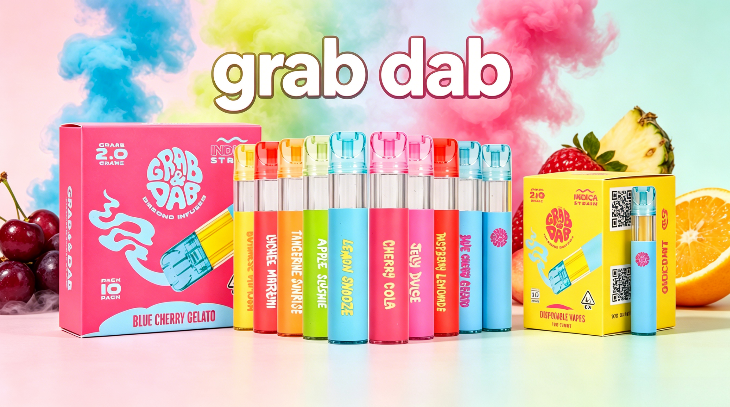
A **grab dab disposable box** is product packaging for disposable or dab-related vape products. Typically, it fulfills several functions simultaneously:
- Protection of the device or product
- Brand Presentation on the Shelf
- Space for warning notices and product information
- Tamper Protection
- Transport and Storage Safety
Especially with premium products, packaging is often the first point of contact between the brand and the customer. A high-quality box can build trust. Conversely, cluttered packaging that is difficult to recycle can have the opposite effect.
The Environmental Problem: Disposable Often Means a Short Lifespan
The main problem lies in the life cycle. Single-use packaging is produced, printed, transported, used briefly, and then disposed of. If it consists of multiple materials that are difficult to separate, the likelihood of genuine recycling drops significantly.
Particularly problematic are:
- Plastic windows
- Coated Cardboard
- Metallized Films
- Foam inserts
- Mixed Material Composites
- Strong Laminations
- Non-separable labels or adhesives
Every year, millions of tons of plastic waste enter aquatic ecosystems worldwide. This demonstrates that packaging design is not merely a marketing issue, but part of a global waste problem.
Is a Grab Dab Disposable Box truly sustainable?
A grab dab disposable box can be more sustainable, but it is not automatically sustainable. The difference lies in the design.
A more sustainable box should:
- Consist of FSC-certified paper or cardboard
- Contain as little plastic as possible
- Ohne unnötige Fensterfolie auskommen
- To be printed with water-based or soy-based inks
- Be easy to disassemble
- Do not use coatings that are difficult to recycle.
- Designed to be as compact and material-efficient as possible.
It is important to note: "Paper-based" does not automatically mean sustainable. If cardboard is heavily laminated, coated with plastic, or combined with film, its recyclability can decrease significantly.
EU Rules Are Changing the Packaging Market
The PPWR will be particularly important for packaging brands. It aims to reduce packaging waste, strengthen reuse, and improve recyclability.
Industry analyses regarding the PPWR indicate that, starting in 2030, packaging is to be considered recyclable only if it is at least 70% recyclable.
For manufacturers of a **grab dab disposable box**, this means that the design should be prepared for future requirements as early as 2026. Those who continue to rely on multi-material solutions that are difficult to separate now risk incurring future redesign costs.
Disposable Vape Waste: The Bigger Problem Behind the Box
When packaging is used for disposable vapes, the question of sustainability does not end with the box. Many disposable vapes contain lithium-ion batteries. These do not belong in regular household waste.
Improperly disposed-of lithium-ion batteries can trigger fires and jeopardize recycling processes. Therefore, a good grab dab disposable box should not only be recyclable but also include clear disposal instructions.
A QR code can direct customers to local recycling information, return programs, or safety instructions.
Avoiding Greenwashing: What Brands Should Watch Out For
Many packaging materials appear "green" but are not truly so. Terms such as "eco," "natural," or "sustainable" are not sufficient. Potential customers and retailers are increasingly looking for proof.
Credible, sustainable packaging requires:
- Specific Material Specifications
- Recycling Instructions
- Certifications, for example FSC
- Elimination of unnecessary plastic parts
- Clear separability of components
- Reduced packaging size
- Transparent Communication
A grab dab disposable box, therefore, shouldn't just look green. It should be demonstrably better engineered.
What a Better Grab Dab Disposable Box Could Look Like in 2026
The next generation of sustainable cannabis and vape packaging will be more minimalist, lighter, and smarter.
1. Mono-Material Design
A box made from a single primary material is easier to recycle than packaging consisting of cardboard, film, a plastic tray, and metallic effects.
2. Plastic-Free Inserts
Paper-based inserts can replace plastic trays while still providing product protection.
3. Digital Information Displays
QR codes can reduce lengthy package inserts and provide additional information digitally.
4. Less Coating
Matte special effects, soft-touch laminations, or foil finishes convey a premium look but can complicate recycling.
5. More Compact Structure
Less air in the packaging means lower shipping volume and reduced material consumption.
What does this mean for brands and retailers?
For cannabis and vape brands, sustainable packaging is a competitive advantage. Customers want products that feel high-quality but do not appear wasteful. At the same time, retailers and regulatory authorities are increasingly demanding clear evidence.
An optimized Grab Dab disposable box can help brands:
- To build trust
- To reduce compliance risks
- To demonstrate environmental awareness
- To position oneself more professionally on the shelf
- To reduce shipping and material costs
- Preparing for Upcoming Packaging Regulations
Sustainability is, therefore, not merely a cost factor. It is a selling point.
Conclusion: Sustainable only if design and disposal are right.
The grab dab disposable box can be part of a more sustainable packaging strategy—but only if it is designed with intent. Key factors include material selection, recyclability, size, printing technique, separability, and clear disposal instructions.
A single-use box is not automatically eco-friendly. However, it can be significantly improved—through paper-based materials, reduced plastic content, simple recycling pathways, transparent communication, and smarter design.
For brands, the most important takeaway is this: Sustainability does not begin with the advertising slogan. It begins with packaging design.
Note: This article is for informational purposes only and is directed at brands, retailers, and adult readers in markets where the relevant products are legal.
Attention : grab dab v3 2g disposable | grab dab | 2g disposable vape | vape for sale
 empty 1g vape
 empty 2g vape
 empty 3g vape
 empty dual chamber vape
 empty led vape
 USA STOCK VAPE
 EU German stock vape