Innovative Trends in Khalifa Kush Vape Packaging: What Brands Should Expect in 2026
In 2026, the vape and cannabis market will be shaped not only by new products, but above all by packaging that becomes safer, more sustainable, smarter, and stronger in terms of branding.
For premium brands in the realm of Khalifa Kush packaging, simply designing an eye-catching box is no longer sufficient. Today, packaging serves simultaneously as a selling point, a compliance tool, a means of product protection, and a signal of trust.
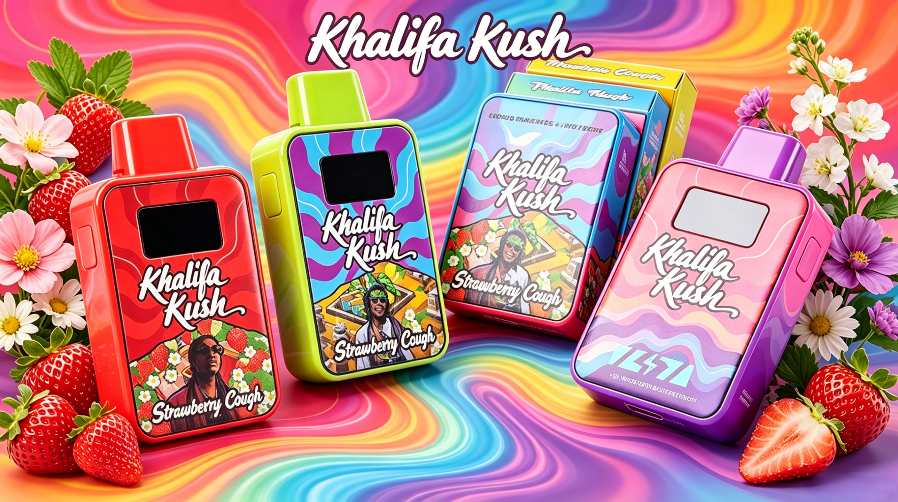
Khalifa Kush positions itself as a cannabis brand offering products such as flower, pre-rolls, vapes, edibles, and concentrates in select markets. This is precisely why vape packaging in this segment is particularly demanding: it must convey a premium aesthetic, meet regulatory requirements, and simultaneously protect the product against counterfeiting, moisture, oxygen, and physical damage.
Why Vape Packaging Will Become More Strategic in 2026
These figures demonstrate why packaging is increasingly becoming a focal point for cannabis and vape brands. The global legal cannabis market was estimated at $78.76 billion in 2025 and is projected to grow to $216.76 billion by 2033. In parallel, the global e-cigarette and vape market was estimated at $45.74 billion in 2025, with an increase to $462.14 billion forecast by 2033.
The market for vape cartridges is also growing dynamically: it stood at US$1.81 billion in 2024 and is projected to reach US$6.0 billion by 2030.
For brands, this means: the more crowded the market becomes, the more packaging determines whether a product inspires trust on the shelf. Consequently, in 2026, Khalifa Kush packaging must do more than merely provide branding. It must tell the brand’s story, visibly demonstrate safety, and win over the buyer in a matter of seconds.
1. Child-resistant packaging remains the most important standard.
With cannabis vape products, safety is not an optional feature. In regulated markets, cannabis products must be protected against contamination and, additionally, be child-resistant, tamper-evident, and—where necessary—resealable.
Child-resistant packaging is designed to be significantly difficult for children under the age of five to open, while remaining practical for adults. For 2026, this means that premium packaging will not only be secure but will also integrate this security with elegance.
Instead of bulky mechanisms, customers expect sleek drawer boxes, push-and-turn solutions, certified CR inserts, and high-quality closures that combine security with design.
2. Tamper-Evident Design Becomes a Signal of Trust
Particularly with vape products, buyers want to be able to tell immediately whether a product is intact. A cleanly integrated seal, a tear-strip solution, or a tamper-evident sleeve construction can inspire more confidence than a lengthy product description.
For Khalifa Kush packaging, this point is particularly important because premium buyers are not merely purchasing a product; they expect a controlled brand experience. Consequently, in 2026, packaging will increasingly incorporate visible security features: tamper-evident seals, clearly identifiable signs of first opening, sealed inner packaging, and QR-linked batch information.
3. Sustainability Shifts from a "Nice-to-Have" to a Prerequisite for Market Access
In 2026, sustainability is no longer merely a matter of corporate image. In the EU, the new Packaging and Packaging Waste Regulation—known as the PPWR—entered into force on February 11, 2025, and will generally apply as of August 12, 2026. It covers all packaging and packaging waste, regardless of material or origin.
The pressure is real: In 2023, around 79.7 million tonnes of packaging waste were generated in the EU—that is, 177.8 kg per inhabitant. Paper and cardboard accounted for 40.4%, and plastic packaging for 19.8%.
For cannabis and vape brands, this means: recyclable materials, paper-based solutions, reduced plastic content, and clearer material separation are becoming increasingly important.
Therefore, modern Khalifa Kush packaging should not only look good but also be designed to conserve resources. Particularly in demand in 2026 are:
- FSC-certified cardboard
- Mono-material designs
- Less Lamination
- Soy- or water-based printing inks
- Compact structures with reduced material usage
- Recyclable inserts instead of unnecessary plastic trays
The best packaging looks high-quality without being wasteful.
4. Smart Packaging: QR Codes, CoAs, and Digital Authentication
In 2026, vape packaging is becoming increasingly digital. QR codes and barcodes can connect customers with Certificates of Analysis, product authentication, terpene profiles, recycling instructions, or loyalty programs.
For brands, this is an opportunity. A QR code can be more than just a mandatory detail; it can create transparency and show the buyer that the product has been verified, is traceable, and is authentic.
However, it is crucial to note: Digital features must not simply replace regulatory-mandated information. For Khalifa Kush packaging, this means: Smart packaging should complement compliance, not circumvent it.
5. Premium Minimalism Instead of Overloaded Graphics
In 2026, cannabis packaging is moving away from loud, youth-oriented designs. This is not merely an aesthetic decision, but also a regulatory one; in many markets, packaging is prohibited from being designed to specifically appeal to minors.
Premium vape packaging therefore places a stronger emphasis on:
- Matte surfaces
- Clear Typography
- Black, gold, cream, or natural tones
- Subtle embossing
- Spot UV Effects
- Structured Products
- Minimalist Icons
- Clear Product Architecture
Strong Khalifa Kush packaging doesn't have to be loud. It must immediately convey a sense of high quality.
6. Small Packaging, Large Information Area
Vape cartridges and disposable vapes present packaging designers with a practical challenge: limited space and numerous mandatory disclosures. Consequently, in 2026, multi-layer labels, peel-and-reseal labels, booklet labels, and well-structured information panels will become increasingly important.
This makes the packaging more complex, but also more professional. Those who work with an experienced packaging partner early on reduce the risk of costly redesigns.
7. Counterfeit Protection Becomes Brand Value
The more well-known a brand becomes, the more important protection against imitation becomes. In the case of premium cannabis products, counterfeit packaging can not only cost sales but also destroy trust.
Therefore, in 2026, more brands will rely on anti-counterfeit elements.
- Serialized QR Codes
- Hologram Stickers
- Microtext
- UV Printing
- Variable Data
- Tamper-evident closures
- Batch Matching between Packaging and CoA
This is particularly relevant for Khalifa Kush packaging, as buyers expect authenticity in premium products. Packaging that makes authenticity verifiable protects not only the product but also the brand.
8. Improved Product Preservation Through Material Selection
Vape products are sensitive to light, heat, oxygen, and mechanical damage. Therefore, packaging must not only look attractive but also support product integrity.
For cartridges and disposables, sturdy inserts, custom-fit compartments, light-shielding cardboard packaging, and secure closure systems are becoming increasingly important.
Effective packaging prevents cartridges from wobbling, leaking, breaking, or sustaining damage while on the shelf. Particularly with premium product lines, the initial tactile impression can be decisive: if the box is sturdy, impeccably finished, and precisely engineered, the product itself appears to be of higher quality.
What exactly should brands expect in 2026?
The most significant change is this: packaging is becoming more holistic. Design, compliance, sustainability, product protection, and digital features must be planned in conjunction. A beautiful box alone is no longer sufficient. Nor is a sustainable box that lacks compliance. And a secure box that looks cheap is ill-suited to a premium product.
For brands investing in Khalifa Kush packaging, the following priorities should take center stage in 2026:
- Certified child-resistant structures
- Tamper-Evident Details
- Recyclable or material-reduced designs
- QR-Based Authentication and CoA Access
- Premium finishes without an overly youthful aesthetic.
- Space-Saving Labeling Solutions for Small Vape Products
- Strong Brand Leadership Through Color, Typography, and Tactility
Conclusion: The future of Khalifa Kush vape packaging is safe, smart, and high-quality.
In 2026, Khalifa Kush packaging will impress not only through eye-catching design, but through trust. Customers expect packaging that feels premium, functions reliably, takes regulatory requirements seriously, and is simultaneously designed with greater sustainability in mind.
For cannabis and vape brands, this represents a major opportunity. Those who plan their packaging strategically from the outset can differentiate themselves more clearly on the shelf, reduce compliance risks, and create a premium experience that customers recognize.
The winners of 2026 will not be the brands with merely the most beautiful packaging, but rather those whose packaging perfectly combines safety, style, and credibility.
Sources
Attention : khalifa kush 2g disposable | wholesale khalifa kush vape | 2g disposable vape | cheap vape
 empty 1g vape
 empty 2g vape
 empty 3g vape
 empty dual chamber vape
 empty led vape
 USA STOCK VAPE
 EU German stock vape