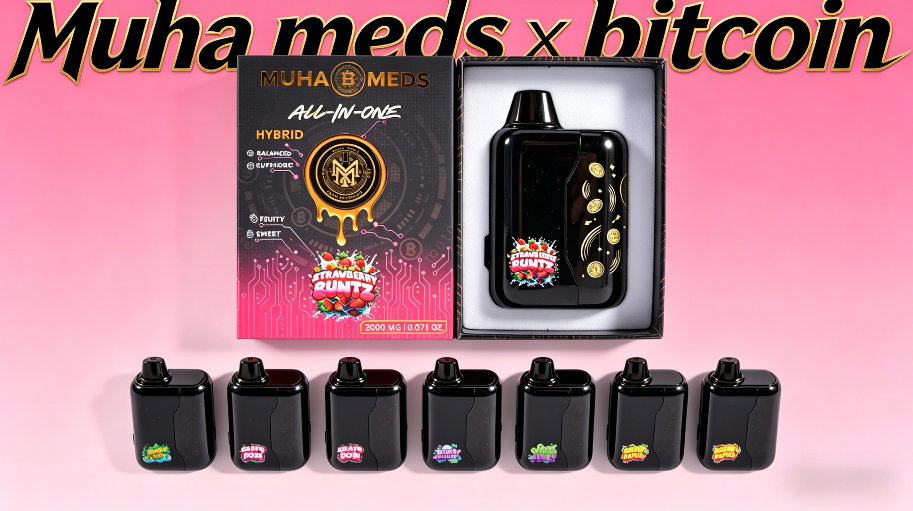
What Consumers Should Know About MM BTC Pen Cartridges and Modern Vape Products
Those searching for **mm btc pen cartridges** typically seek, above all, to understand what lies behind such products, what factors to consider when purchasing, and how they differ in terms of quality, labeling, and associated health risks. This contextualization is particularly crucial for vape products, as product names within the market are often used inconsistently, and packaging or branding frequently reveal little about the actual composition. At the same time, current public health sources indicate that e-cigarettes and vape products continue to raise significant health concerns. The WHO emphasizes that e-cigarettes are harmful to health and cannot be considered safe; similarly, the CDC points to harmful ingredients and aerosols that can penetrate deep into the lungs.
What exactly is meant by mm btc pen cartridges?
When searching for **mm btc pen cartridges**, one currently encounters primarily commercial listings from the vaping sector. This suggests that the term is used primarily as a product or model designation within the trade, rather than as a standardized technical category with a clearly defined composition or publicly documented manufacturing standards. This is important for consumers, as a well-known name or eye-catching design does not automatically guarantee transparency regarding origin, ingredients, or quality control measures.
Why Product Transparency Is More Important Than Marketing Terms
Many buyers initially focus on capacity, flavor, or device design. From a consumer perspective, however, other factors are far more critical: Is there reliable information regarding ingredients? Is it clearly indicated whether the product contains nicotine? Are independent laboratory test results or regulatory disclosures available? The CDC identifies, among other things, nicotine, carcinogenic chemicals, heavy metals—such as nickel, tin, and lead—volatile organic compounds, and ultrafine particles capable of deep inhalation as substances found in e-cigarettes. These points demonstrate why, when it comes to vape products, the focus should be not on branding, but on transparent and verifiable product information.
The Current Data: Vaping Remains a Relevant Public Health Issue
Recent U.S. data indicate that e-cigarettes remain widespread. The CDC data brief from January 2025 analyzes the 2019–2023 National Health Interview Survey and outlines trends in adult e-cigarette use over a five-year period. Concurrently, the CDC emphasizes on its overview pages that the health risks associated with e-cigarettes are real and that these products are by no means harmless. The WHO states this even more explicitly: the evidence demonstrates that e-cigarettes are harmful to health and are not safe.
What consumers should specifically check when it comes to products like mm btc pen cartridges.
Anyone evaluating a product in this category should pay particular attention to four key factors. First, clear labeling: Does the product contain nicotine or other active ingredients, and are both the concentration and the ingredients transparently disclosed? Second, testing and batch records: Without verifiable quality control, it remains unclear what the product actually contains. Third, safety and warning notices—for instance, regarding usage, storage, and potential impairment caused by the product. Fourth, the legal classification in the specific jurisdiction, as regulations and permissibility can vary significantly. Such caution is also advisable because the WHO emphasizes that the e-cigarette market is highly diverse, and these products often contain additives, flavorings, and chemicals that may be harmful to health.
Why New Users, in Particular, Should Be Cautious
For inexperienced consumers, the marketing language surrounding vape products is often misleading. Terms such as "smooth," "premium," or "superior" reveal little about safety or actual quality. Official health sources, conversely, issue very specific warnings regarding potential contaminants: the CDC cites aerosol particles, heavy metals, and chemical substances; furthermore, it points out that many e-cigarettes contain nicotine, which can be highly addictive. This is particularly relevant for younger people and first-time users, as nicotine can impair the development of certain brain functions.
Not just a lifestyle issue, but also a quality and health problem.
Public health authorities no longer view vaping merely as a lifestyle phenomenon. The WHO warns that e-cigarettes could fuel a new wave of nicotine addiction. Furthermore, the CDC points out that "dual use"—that is, the combination of smoking and vaping—does not constitute effective health protection and may even be associated with higher exposure to harmful substances as well as poorer respiratory outcomes. For consumers, this means: anyone researching **mm btc pen cartridges** should evaluate the subject not solely from the perspective of design or ease of use, but—above all—with regard to transparency, the reliability of product claims, and potential health consequences.
Conclusion
The search term **mm btc pen cartridges** currently points primarily to a commercial and product landscape where terminology is often inconsistent and where consumers should look very closely. The most recent statements from the CDC and WHO are clear: vape products are not harmless, and real risks exist regarding ingredients, emissions, and potential health consequences. Those seeking objective information should therefore focus less on advertising claims and more on transparent labeling, verifiable quality documentation, and credible regulatory classification.
Attention : muha meds x bitcoin 2ml disposable vape | muha meds | disposable vape with screen | custom vape
 empty 1g vape
 empty 2g vape
 empty 3g vape
 empty dual chamber vape
 empty led vape
 USA STOCK VAPE
 EU German stock vape