The Benefits of Using Empty Packman V6 Cartridges for DIY Vape Projects
(Keyword: packman v6 empty cartridge)
Why are "Empty Cartridges" in such high demand?
Empty cartridges (often listed as "empty cartridge" or "empty disposable") are popular in the DIY context because they offer the promise of thinking about form factor + hardware separately from content: You can choose a device that fits well in your hand, is leak-proof and works reliably – and obtain the contents (within legal limits) separately.
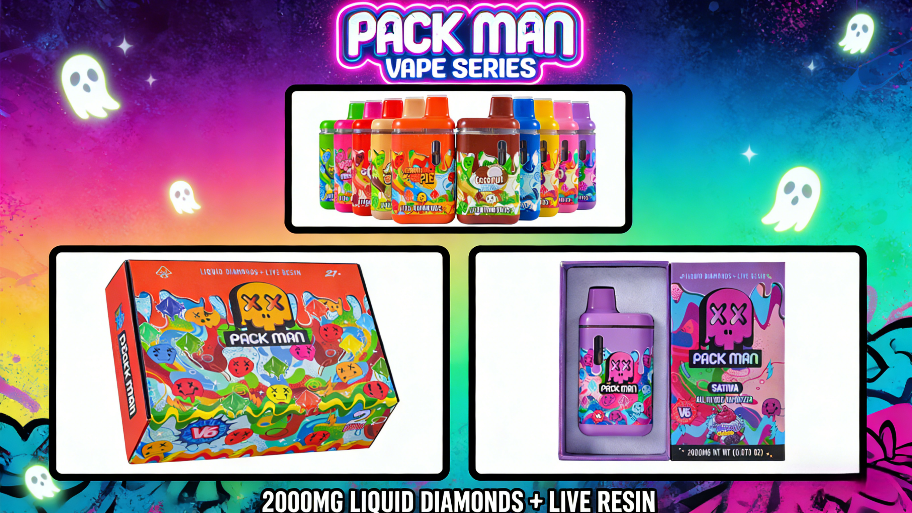
Search terms like "packman v6 empty cartridge" therefore frequently appear in product research: as placeholders for a specific housing/cartridge platform. However, the name is not the deciding factor, but rather whether the setup is compliant with regulations and poses the lowest possible health risks.
1) Advantage: More control over ingredients (quality begins in the liquid)
The biggest "benefit" of empty cartridges is ingredient control – at least in theory. In practice, quality is only genuine if you really know what's in the liquid and whether it's suitable for inhalation.
The German Federal Institute for Risk Assessment (BfR) explicitly points out that health risks can arise from nicotine, additives, impurities, and new substances through heating; little is known about long-term effects. DIY setups, in particular, become problematic when ingredients are used for unintended purposes: The BfR advises against self-mixing, for example, due to the risk of poisoning and the risk of using oils – which should “under no circumstances” be included in e-liquids because they can cause severe respiratory illnesses when inhaled.
Takeaway: Empty cartridges can facilitate quality control – but only if the ingredients are clear, suitable and legal.
2) Advantage: Product development & testing (without immediately producing large batches)
For “DIY projects” in the legal sense (e.g., nicotine-free flavor liquids, research/development samples), empty cartridges are practical because they allow for small test runs:
- Evaluate new flavors/variants (without mass production),
- Use consistent hardware as a "constant",
- Faster prototyping for devices/packaging.
It is important not to fall into marketing myths: “Quality” is not “tastes good”, but must be measured against safety and legal criteria.
3) Advantage: Compliance is more predictable (if the hardware fits the EU regulatory environment)
Anyone working in the EU must take the tobacco/e-cigarette rules seriously as soon as nicotine-containing products are involved.
A helpful feature of many "empty cartridge" platforms is that they often fit within typical EU borders (at least in terms of form factor). In Germany, for example:
- Max. 20 mg/ml nicotine in nicotine-containing products.
- Max. 10 ml volume for nicotine-containing refill containers.
- Max. 2 ml for disposable e-cigarettes or disposable cartridges containing nicotine.
In addition, there are requirements such as child- and tamper-proof, break- and leak-proof, as well as mechanisms for leak-free refilling.
The EU Tobacco Products Directive (TPD) sets the framework, including the 20 mg/ml upper limit and specifications regarding safety and quality requirements.
Takeaway: The benefit of empty cartridges lies in predictability: You can choose hardware that fits more easily into regulated boundaries – but the obligations (labeling, warnings, product information, etc.) remain.
4) Advantage: Potentially fewer “hidden risks” than with no-name, single-use disposable products – if you choose correctly.
A key problem with many disposable devices is that users cannot see what the hardware is releasing into the aerosol. And there is very recent, hard data on precisely this:
A study published in ACS Central Science in 2025 shows that some modern disposable devices can release higher amounts of metals/metalloids after just a few hundred puffs than older refillable e-cigarettes – including nickel, antimony, and lead. In one case, a device was reported to release more lead in a single day than almost 20 packs of traditional cigarettes; furthermore, some devices showed nickel and Sb(III) levels exceeding cancer risk limits or thresholds for other health risks.
This is a strong argument as to why “DIY” should not mean “any cheap disposable hardware”, but rather: material quality, tightness, temperature stability, documented specifications.
5) Advantage: “DIY” can avoid additives – especially where authorities warn against them.
A very topical example of why ingredient control matters is cooling agents. The German Federal Institute for Risk Assessment (BfR) published a statement on January 23, 2026: With moderate to high consumption, most of the evaluated cooling agents pose a possible long-term health risk; among other things, they share the potential for damage to the liver and kidneys. The BfR advises against the use of these cooling agents in e-liquids and emphasizes the weak data on their inhalational effects.
Takeaway: Empty cartridges are useful when they help to avoid problematic additives – not when they encourage experimentation with questionable chemicals.
6) The underestimated “benefit”: Disposal & take-back are becoming more important (Germany 2026)
If "packman v6 empty cartridge" is intended as a disposable platform, then the quality debate also includes: Disposal & Fire Risk.
The Federal Ministry for the Environment (BMUKN) points out that from 1 July 2026 onwards, consumers will be able to return used disposable e-cigarettes to all points of sale (e.g. kiosks, petrol stations); the aim is, among other things, to protect against fires caused by improperly disposed of devices with lithium batteries and to improve recycling.
Takeaway: Sustainability is not just about "image". In Germany, take-back/disposal will become even more visible in terms of regulations and practice by 2026.
Practical tip: Mini checklist (without craft instructions)
If you're writing about blank cartridges as a "DIY project basis", it remains professional if you stick to due diligence:
- Only legal, declared, inhalation-suitable contents (no oils, no unknown additives).
- No cooling agent experiments: observe current BfR warnings.
- Take hardware risks seriously (metal emissions are real – especially with disposables).
- Comply with EU/DE regulations (e.g. 20 mg/ml nicotine, 2 ml for disposable nicotine cartridges; safety requirements).
- Communicate consistently about returns/disposals from 2026 onwards.
Conclusion
Empty platforms like the "packman v6 empty cartridge" can offer real advantages in legal DIY contexts: control, testability, standardization, and potentially better compliance planning. At the same time, the latest strong sources show:
- Disposable hardware can cause relevant metal exposures (ACS 2025).
- Additives such as cooling agents will be under greater regulatory scrutiny in 2026 (BfR 23.01.2026).
- In Germany, take-back/disposal will become more broadly mandatory from July 1, 2026.
If you want, I can also create an SEO version for you (meta description, FAQ scheme, internal link structure) – still without instructions for bottling or hints that facilitate illegal use.
Attention : packman v6 disposable | empty packman vape | led disposable vape | cheap vape

 English