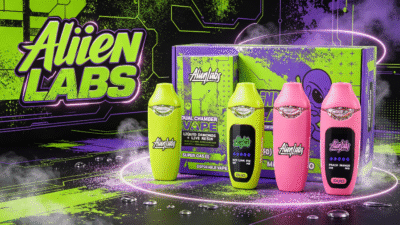
The science behind Whole Melt V7 THC batteries: Why they make the vaping experience more stable and safer.
Whether in retail or B2B sourcing: In modern vaping systems (even where cannabinoid cartridges are legal), the battery is crucial for consistency, temperature control, and safety reserves – far more than just providing "more power." This is precisely where what many understand as "Whole Melt V7 THC Batteries" comes in: a battery platform that controls performance instead of simply delivering it.
At the same time, the topic quickly becomes technical – and importantly, studies show that higher power output (watts/voltage) increases the risk of thermal overheating, which can lead to the formation of more carbonyl byproducts. In an often-cited study, carbonyl levels increased dramatically as soon as the recommended power range was exceeded – in some cases by several times.
1) What "better batteries" in vape systems really mean
A modern vape battery is not just a single cell, but a system consisting of:
- Lithium-ion cell (energy storage)
- Protection circuits (Protection Circuit / BMS logic) against overcharging, deep discharge, short circuit, and overcurrent.
- Power control (DC-DC / PWM) for consistent power output.
- Sensors & Safety Features (e.g., time cutoff, undervoltage protection)
This precise combination is at the heart of what safety standards like UL 8139 address: electrical systems including battery, charging, protection circuits, and failure scenarios.
2) Consistent performance = fewer "hot spots" = more reproducible aerosol formation
Why does battery engineering even affect the "user experience" (without descending into consumer tips)?
- Voltage drop (voltage sag) in a weak/small cell leads to fluctuating heating performance.
- Fluctuating heating output can promote local overheating ("hot spots").
- Research on e-cigarette emissions shows that wattage/power settings are a key driver of carbonyl formation – and the dynamics are complex (depending, among other things, on coil lifespan and operating conditions).
Interpretation for hardware sourcing: A battery that cleanly limits and stabilizes power output is more likely to help avoid extreme temperature spikes (not "more strongly," but rather in a more controlled manner).
3) Why "too much power" can be a quality and compliance problem
Carbonyls (e.g., formaldehyde/acetaldehyde/acrolein) are formed, among other things, by the thermal decomposition of carrier substances (e.g., PG/VG in classic e-liquids). Studies show that with increasing power, carbonyl emissions can also increase, especially when operating outside of sensible operating parameters.
This is the reason why technical features such as:
- Performance limitation
- Undervoltage cutoff
- Overcurrent protection
- Temperature/time-based shutdown
is increasingly considered a "must-have" in B2B audits.
4) Security & Charging: What "latest & authoritative" means today
The most common risks for batteries in vaping devices are not "mysterious," but rather typical of lithium-ion batteries:
- incorrect charging / incompatible charger
- mechanical damage
- Cheap battery cells without reliable protection circuitry
The FDA explicitly points out fire/explosion risks and provides practical safety tips (charging, storage, do not use damaged batteries).
B2B Takeaway: If you're marketing "Whole Melt V7 THC Batteries" (or similar platforms), the reputable approach is to prioritize safety features and evidence – not "more vapor."
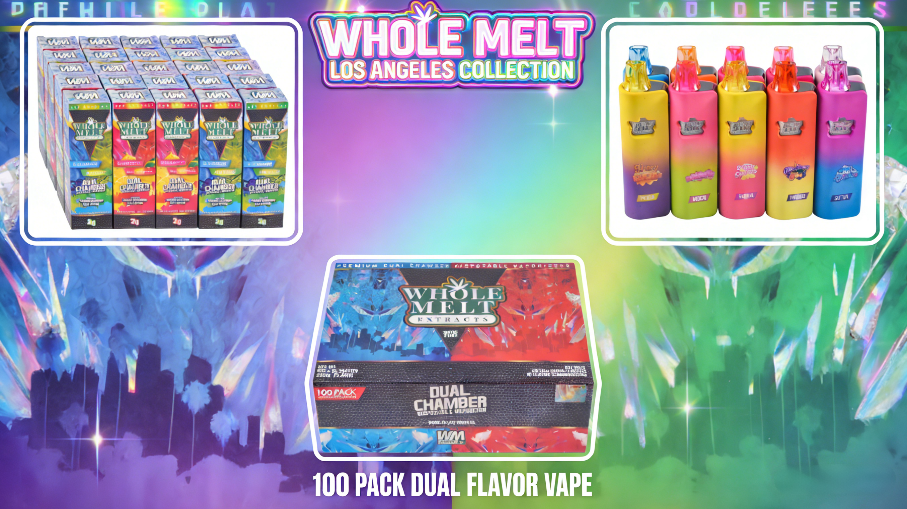
5) The role of packaging: Why "whole melt v7 vape boxes" are part of the technology story
Many underestimate how strongly packaging influences actual product safety and return rates. Good whole melt v7 vape boxes (as a keyword and product concept) typically accomplish three things:
- Transport protection: Reduces pressure/impacts → less cell damage
- Short circuit prevention: Contacts/buttons are protected against unintentional activation.
- Traceability: Lot/batch fields, QC stickers, serial number logic, document references
In the context of transportation, UN 38.3 is a key term for lithium batteries: batteries must undergo design tests; authorities such as PHMSA (USA) explain the UN 38.3 test summary requirement in great detail.
In practical terms, this means for your Whole Melt V7 vape boxes: Space for a test summary note, serial/batch number fields, and clear handling symbols is not a "design gimmick," but rather reduces inquiries from wholesalers.
6) Germany/EU: Packaging & EPR as a marketing lever (and risk)
If you actively promote "Germany Warehouse" or DE-B2B, packaging quickly becomes a compliance issue:
- Packaging Act / LUCID: Anyone who places packaged goods on the market in Germany must generally be registered in the LUCID register.
- WEEE / ElektroG: A WEEE registration may be required for electrical and electronic equipment; the ear foundation describes the procedure and the obligations very clearly.
- EU Battery Regulation (EU) 2023/1542: Includes, among other things, requirements for the removability/replaceability of portable batteries, which are to be enforced from February 18, 2027 (relevant for product design roadmaps).
Here too, whole melt v7 vape boxes are not just "boxes," but a place to clearly communicate EPR/registration logic, instructions, and evidence (especially in B2B sales).
7) Purchasing/QA checklist for "Whole Melt V7" battery platforms (without brand guarantee)
Publicly available, independent laboratory data specific to the brand are often limited – therefore, the most reliable approach is to request specifications and supporting documentation.
Questions you can standardize in the sourcing process:
- Are there testing approaches according to UL 8139 (or comparable safety evaluations)?
- Are the cells/battery packs tested according to IEC 62133-2 (or equivalent)?
- Is the UN 38.3 Test Summary available and up-to-date?
- Protection functions: Overcurrent, short circuit, over/undervoltage (documented in writing + QC plan)
- Button/Auto-Draw Logic: Protection against "accidental activation"
- Packaging: Insert/tray, contact protection, drop test approach, clear batch fields (whole melt v7 vape boxes as a QC element)
- Document package: Spec sheet, QC checkpoints, serial number logic, complaints process
Conclusion: "Better" means more controlled – and this can be proven through data and documents.
The most compelling "science story" behind Whole Melt V7 THC batteries is not a buzzword, but rather:
- more stable power output (fewer extreme values),
- Safety standards & test logic (UL/IEC/UN 38.3),
- Well-designed Whole Melt V7 vape boxes that combine transport protection, traceability, and compliance communication.
If you'd like, I can adapt the text exactly to your business (e.g., B2B tone, "hardware only/blank," German warehouse, or as WordPress HTML with a CTA section) – just tell me which target group you're addressing in the German market (distributors, retail chains, OEM/ODM, fillers).
Attention : whole melt v7 2g vape | whole melt disposable | led disposable vape | cheap vape
 empty 1g vape
 empty 2g vape
 empty 3g vape
 empty dual chamber vape
 empty led vape
 USA STOCK VAPE
 EU German stock vape